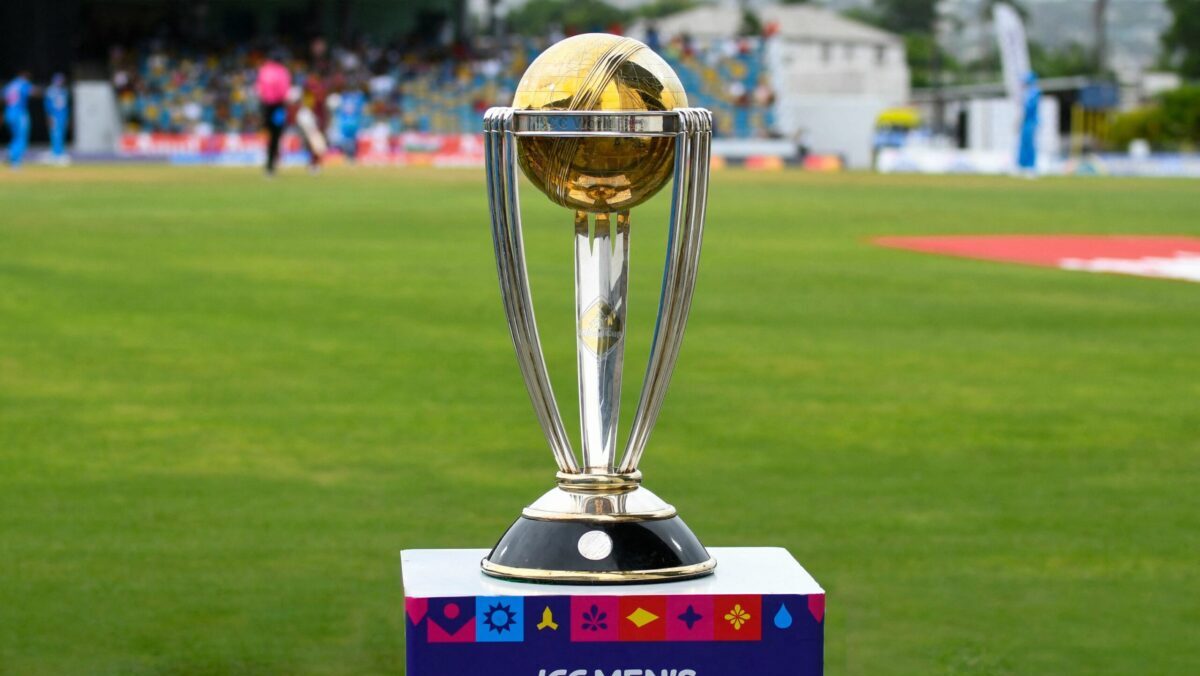
Cricket’s biggest event is heading back to Africa after 24 long years. The ICC has confirmed that the 2027 ODI World Cup will be played across 12 venues spread over South Africa, Zimbabwe and Namibia. The announcement came during a grand ceremony held in Johannesburg, where legends of the game came together to mark the special occasion.
This will be the first time since 2003 that Africa hosts the Men’s Cricket World Cup. Back then, South Africa, Zimbabwe and Kenya had jointly staged the event. This time, Kenya has been replaced by Namibia, but the spirit of an African World Cup remains alive.
The venue reveal event in Johannesburg was nothing short of special. Along with the announcement of host cities, the ceremony also brought together some of the biggest names in South African and Zimbabwean cricket history. Graeme Smith, Makhaya Ntini, Hashim Amla, Temba Bavuma and Kagiso Rabada were present from South Africa, while Hamilton Masakadza represented Zimbabwe and Rudolf Jansen van Vuuren represented Namibia.
Their presence added extra meaning to the event, as these are the players who have carried African cricket forward over the years. Now, their countries will get a chance to host the world once again.
ICC Chairman Jay Shah spoke about the announcement and said the return of the tournament to Africa after 24 years is a big moment for the sport. He added that South Africa, Zimbabwe and Namibia will together deliver a memorable event that shows the passion and diversity of the region.
The 12 Venues Across Three Countries
South Africa will host the biggest share of matches, with eight stadiums getting the nod. These include:
-
Wanderers Stadium, Johannesburg
-
Centurion, Tshwane
-
Newlands Cricket Ground, Cape Town
-
Kingsmead Cricket Ground, Durban
-
St George’s Park, Gqeberha
-
Mangaung Oval, Bloemfontein
-
Boland Park, Paarl
-
Buffalo Park, KuGompo City (formerly East London)
Zimbabwe will host three venues, and one of them is completely new. The three stadiums are Harare Sports Club in Harare, Queens Sports Club in Bulawayo, and the newly built Fale Mosi-oa-Tunya International Cricket Stadium in Victoria Falls. This new stadium in Victoria Falls is expected to be one of the most scenic grounds in world cricket, given its location near one of the seven wonders of the natural world.
Namibia will get to host matches for the first time at this scale, with the Namibia Cricket Ground in the capital city Windhoek chosen as its lone venue.
A New Format For 2027
The 2027 World Cup will not follow the same format used in the last few editions. This time, the ICC has planned a three-stage format that will feature a total of 57 matches, which is a big jump from previous tournaments.
The tournament will begin with what is called the Super Series. In this stage, three teams ranked from 12 to 14 will play a round-robin format among themselves. Only the winning team from this group will move forward into the main tournament.
After that, the 30-match round will take place, featuring 12 teams. These teams will be split into two groups of six, and every team in a group will play against the other five teams. Once this stage ends, the top three teams from each group, along with the next best-placed team from both groups combined, will move into the next stage.
This next stage is called the Super 7. As the name suggests, seven teams will battle it out here in a full round-robin format, which means 21 matches in total. The top four teams from the Super 7 will then move on to the semi-finals.
The semi-final matchups will also follow a set pattern. The team that finishes on top of the Super 7 table will play the fourth-placed team, while the second-placed team will face the third-placed team. The winners of these two semi-finals will then meet in the final.
This new format is designed to give more matches, more context and more chances for teams to fight their way through the tournament, rather than getting knocked out early after one bad game.
A Look Back: Every ODI World Cup Winner And Runner-Up
Before the 2027 edition kicks off in Africa, here is a quick look at how every Men’s ODI Cricket World Cup has gone so far since it began in 1975.
| Year | Host | Winner | Runner-Up |
|---|---|---|---|
| 1975 | England | West Indies | Australia |
| 1979 | England | West Indies | England |
| 1983 | England | India | West Indies |
| 1987 | India & Pakistan | Australia | England |
| 1992 | Australia & New Zealand | Pakistan | England |
| 1996 | India, Pakistan & Sri Lanka | Sri Lanka | Australia |
| 1999 | England | Australia | Pakistan |
| 2003 | South Africa, Zimbabwe & Kenya | Australia | India |
| 2007 | West Indies | Australia | Sri Lanka |
| 2011 | India, Sri Lanka & Bangladesh | India | Sri Lanka |
| 2015 | Australia & New Zealand | Australia | New Zealand |
| 2019 | England & Wales | England | New Zealand |
| 2023 | India | Australia | India |
Looking at this table, it is clear that Australia has been the most successful team in World Cup history, with multiple titles across different decades. West Indies dominated the early years of the tournament, while India, Pakistan, Sri Lanka and England have all had their own golden moments on the world stage.
Africa’s Cricket History With The World Cup
Africa’s connection with the ODI World Cup goes back a long way. South Africa first took part in the tournament in 1992 after returning to international cricket following years of being banned from the sport. Since then, South Africa has built a strong reputation in ODI cricket, even though a World Cup title has stayed out of their reach so far.
Zimbabwe has also taken part in World Cups regularly since 1983 and has hosted matches before, most notably during the 2003 edition. Namibia, on the other hand, is a newer name in world cricket but has slowly built its presence through qualifying tournaments and associate cricket events over the years.
By bringing the World Cup back to these three nations together, the ICC is giving African cricket a big platform once again. The new stadium in Victoria Falls also shows that infrastructure in the region has grown, and more countries in Africa are now ready to handle matches at the highest level.
A New Chapter For The World Cup
With 12 venues, three host nations and a brand-new three-stage format, the 2027 ODI World Cup is shaping up to be different from anything cricket fans have seen before. From the historic grounds of Newlands and Kingsmead to the brand-new stadium in Victoria Falls, the tournament will take players and cricket lovers across some of the most beautiful and historic parts of Africa.
As preparations begin across South Africa, Zimbabwe and Namibia, this World Cup marks a return of the biggest cricket event to a continent that has waited 24 years for this moment to come back.