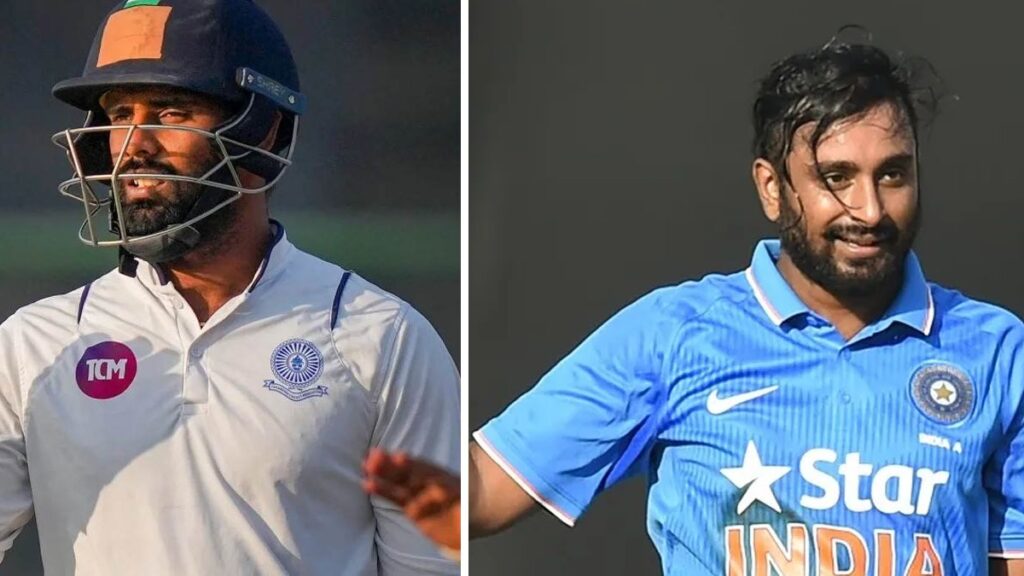
The recent case of Hanuma Vihari, a talented Indian batsman, being removed from the Andhra Pradesh cricket team captaincy due to alleged political interference, has sent shockwaves through the cricketing community. Vihari’s claims have reignited a crucial discussion about the presence of political influence within the Indian cricket structure, raising questions about fair play and the environment provided for players to flourish.
Also Read: Jan Nicol Loftie-Eaton Smashes Fastest T20 Century in 33 Balls
Vihari’s social media post, where he accused a politician’s son of complaining about him, leading to his removal as captain, sparked outrage and ignited memories of a similar incident faced by former Indian cricketer Ambati Rayudu. Rayudu, in a 2023 interview, detailed the alleged attempts by a former BCCI president, Shivlal Yadav, to stifle his career to benefit his son, Arjun.
Ambati Rayudu, a young player at the time, faced constant harassment and unfair treatment from the Hyderabad Cricket Association (HCA) – allegedly at the behest of Shivlal Yadav and his son Arjun. He claimed they even used underhanded tactics, including verbal abuse and psychological pressure, to try and break him down. Despite his talent, Rayudu recounted how his selection for India was hindered for years due to his conflict with Arjun.
#AmbatiRayudu Rebel with a cause…!! kids are laughing at him without knowing d facts..Arjun Yadav, Shiv Lal Yadav & HCA big heads ruined many young players career..Rayudu is d best in them! MSK Prasad still stopping rayudu jus based on his performance ? pic.twitter.com/jIr4bgCqRy
— . (@mcdowellmurthy) July 3, 2019
These two incidents highlight the potential negative impact of political interference on the development of Indian cricket. Such practices not only discourage deserving players but also create an environment of fear and uncertainty, hindering their ability to perform to their full potential. Additionally, it casts a shadow of doubt on the fairness and transparency of selection processes, raising concerns about whether decisions are truly based on merit and performance.
It’s important to understand that this isn’t just about individual players. The presence of political influence can have broader consequences for the entire cricketing ecosystem. It can lead to a culture of nepotism and favouritism, where talent is overlooked for personal connections, hindering the overall growth and development of the sport.
Moreover, such practices can damage the reputation of Indian cricket on the international stage. When allegations of political interference surface, the sport loses its integrity and respect in the eyes of the global cricketing community.
The whole team knows! ❤️ pic.twitter.com/l5dFkmjGN9
— Hanuma vihari (@Hanumavihari) February 26, 2024
So, what can be done to address this issue?
Firstly, the BCCI needs to take a strong stance against any form of political interference in the selection process and team management across all levels. This can be achieved by implementing stricter regulations and robust oversight mechanisms to ensure transparency and accountability.
Secondly, there needs to be a cultural shift within the cricketing community, where merit and performance are the sole deciding factors in selection and leadership positions.
Finally, players must feel empowered to speak up against any instance of unfair treatment or undue influence. Creating a safe space for them to voice their concerns is crucial in tackling this issue effectively.
The cases of Hanuma Vihari and Ambati Rayudu serve as stark reminders that there is still much work to be done to protect the sanctity of Indian cricket. Addressing the issue of political interference requires collective effort from players, administrators, and fans. Only by working together can we ensure that the Indian cricket ecosystem thrives on merit, talent, and fair play, allowing the sport to reach its true potential on the world stage.