Shreyas Iyer comes across list of those players who would never shy away to express themselves as India lost another game under his new leadership where he said ” We know that we did mistake when it comes to selecting players also till 15th over we had game under control but it went away quickly post that it was easy cakewalk for them” .
Iyer captaincy have been heavily critisized, as Men in Blue have failed to win single game under his leadership which include losing 2 games against Ireland followed by another loss against England.
Several Worst Calls have played their part to make decision swept against them which include playing 3 spinners in overcast conditions, inability to control the momentum of game in middle overs, not bowling tight lengths in crunch phase of the game have contributed towards India’s epic downfall.
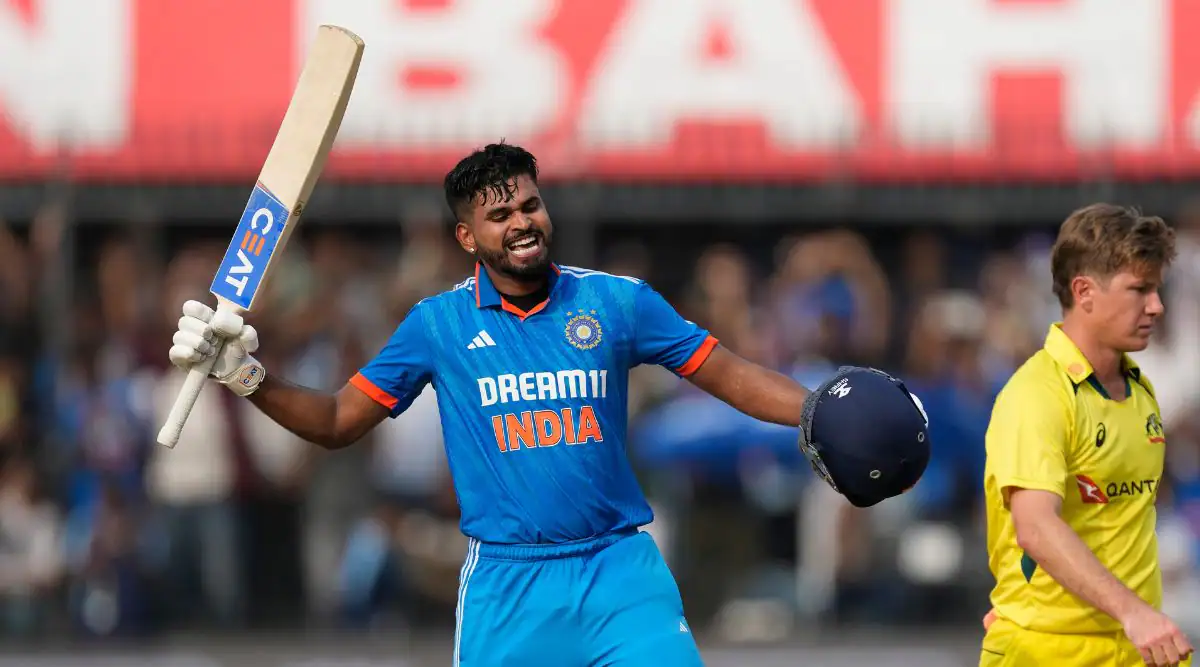

Many Fans have starting establishing projections on social media where they said ” Doing Captaincy for Punjab Kings as well as for Indian Team is two different thing, Iyer has lot of catch up when it comes to marhsalling troops for India”
However as Journalist, I would say that Indian Fans need to show sort of resistance and Patience as quickly we can’t expect results to roll in our favor and Iyer certainly need long run before we draw any conclusion towards it.
| Section | Details |
|---|---|
| Headline | Shreyas Iyer Under Pressure After Third Consecutive Defeat as India’s Captain |
| Key Statement by Shreyas Iyer | “We know that we made mistakes when it came to selecting the playing XI. Till the 15th over, we had the game under control, but it slipped away quickly after that, and it became an easy cakewalk for them.” |
| Current Record as Captain | India are yet to register a victory under Shreyas Iyer’s leadership. The team has suffered three consecutive defeats—two against Ireland and one against England. |
| Major Reasons Behind India’s Defeat | • Selection mistakes in the playing XI.• Decision to field three spinners despite overcast conditions.• Failure to control the momentum during the middle overs.• Bowlers struggled to maintain tight lines and lengths in the death overs.• England capitalized on India’s mistakes and comfortably chased down the target. |
| Captaincy Under Scrutiny | Iyer’s tactical decisions have come under heavy criticism following India’s poor performances, with many questioning his on-field leadership and decision-making. |
| Social Media Reaction | Several fans expressed that captaining an IPL franchise like Punjab Kings is completely different from leading the Indian national team. Many believe Iyer still has a lot to learn about handling pressure at the international level. |
| Positive Take | Despite the criticism, leadership should not be judged solely on the basis of three matches. Every captain requires time to understand the team combination, develop tactical awareness, and build confidence. |
| Journalist’s Opinion | Indian fans should remain patient and avoid drawing conclusions too early. Shreyas Iyer deserves a longer run as captain before his leadership abilities are fairly evaluated. Building a successful international captain takes time, and consistency in opportunities is essential. |
| Overall Summary | India’s disappointing start under Shreyas Iyer has certainly raised questions, but the sample size remains too small to pass a final verdict. While tactical improvements are needed, patience from fans and team management could prove crucial in allowing Iyer to grow into the leadership role. |
FAQ 1: Why has Shreyas Iyer’s captaincy come under criticism after India’s recent defeats?**
Shreyas Iyer’s captaincy has come under intense scrutiny after India suffered three consecutive defeats under his leadership, including two losses against Ireland followed by another defeat against England. While the results alone have triggered criticism, many cricket experts and fans believe that several tactical decisions during these matches also contributed to India’s disappointing performances. One of the most debated decisions was India’s choice to play three specialist spinners despite overcast conditions that were expected to assist the fast bowlers. Critics argued that the team failed to adapt its playing combination according to the conditions, allowing the opposition to capitalize.
Apart from team selection, India’s inability to control the middle overs proved costly. The bowlers failed to build pressure through dot balls, while the field placements often appeared defensive when attacking options were available. During the crucial death overs, India also struggled to execute yorkers and slower deliveries consistently, enabling England to accelerate comfortably. These tactical shortcomings naturally shifted attention towards the captain, who is responsible for making on-field decisions.
However, captaincy cannot be judged solely on the basis of three matches. Every new leader requires time to understand different match situations, develop tactical instincts, and build confidence within the group. Shreyas Iyer has already demonstrated leadership qualities in domestic cricket and franchise competitions, but international cricket presents a different level of pressure, expectations, and opposition. While criticism is inevitable after consecutive defeats, many former players believe that patience is equally important before reaching any long-term conclusions about his leadership abilities.
FAQ 2: What did Shreyas Iyer say after India’s defeat against England, and what does it reveal about his leadership style?**
Following India’s defeat against England, Shreyas Iyer delivered an honest and straightforward assessment of his team’s performance instead of avoiding difficult questions. He admitted that India had made mistakes while selecting the playing XI and acknowledged that the team had controlled the contest until around the fifteenth over before allowing the game to slip away. Such remarks reflect a captain willing to accept responsibility rather than shifting blame entirely onto individual players or external factors.
Many successful captains have built credibility by openly acknowledging mistakes after defeats. Iyer’s comments suggest that he values accountability and self-evaluation, both of which are essential qualities in modern leadership. Instead of making excuses about conditions or luck, he recognized tactical errors that could be corrected in future matches. This approach may help strengthen trust within the dressing room because players generally appreciate leaders who take collective responsibility during difficult phases.
At the same time, honesty must eventually be supported by improvements on the field. Fans will expect India to learn from recent setbacks by making better team selections, adapting strategies according to match conditions, and responding more effectively under pressure. Leadership in international cricket is judged not only by words but also by consistent decision-making during crucial moments. Therefore, while Iyer’s post-match comments displayed maturity and transparency, his long-term reputation as captain will ultimately depend on how quickly he converts these lessons into improved performances and positive results.
FAQ 3: Should Indian fans remain patient with Shreyas Iyer as captain despite the poor start?**
Patience has always been an important ingredient when evaluating a new captain in international cricket. History shows that several successful captains experienced difficult beginnings before eventually leading their teams to memorable achievements. Three matches, regardless of the results, represent a very small sample size for judging someone’s leadership potential. Every captain requires time to understand player combinations, identify dependable performers, manage pressure situations, and establish a leadership culture within the squad.
Indian cricket carries enormous expectations, and every defeat is magnified because of the team’s massive fan following. Social media reactions often become immediate and emotional, with comparisons drawn between franchise cricket and international cricket. While Shreyas Iyer has previously captained Punjab Kings and other domestic teams, leading India involves greater scrutiny, stronger opposition, and significantly higher pressure. Adapting to these demands is a process rather than an overnight transformation.
Constructive criticism is valuable because it highlights tactical areas that need improvement. However, replacing or judging a captain after only a handful of matches may prevent long-term stability. If the team management continues to support Iyer, provides him with a settled playing XI, and allows him to learn from mistakes, he could evolve into a stronger leader over time. Ultimately, Indian fans should assess his captaincy over a longer period instead of allowing three disappointing results to define his entire leadership journey. Cricket history repeatedly demonstrates that patience, continuity, and experience often shape successful captains far more than early setbacks.
| Frequently Asked Question (FAQ) | Answer |
|---|---|
| 1. Why has Shreyas Iyer’s captaincy come under criticism after India’s recent defeats? | Shreyas Iyer’s captaincy has come under intense scrutiny after India suffered three consecutive defeats under his leadership, including two losses against Ireland followed by another defeat against England. While the results alone have triggered criticism, many cricket experts and fans believe that several tactical decisions during these matches also contributed to India’s disappointing performances. One of the most debated decisions was India’s choice to play three specialist spinners despite overcast conditions that were expected to assist the fast bowlers. Critics argued that the team failed to adapt its playing combination according to the conditions, allowing the opposition to capitalize. Apart from team selection, India’s inability to control the middle overs proved costly. The bowlers failed to build pressure through dot balls, while the field placements often appeared defensive when attacking options were available. During the crucial death overs, India also struggled to execute yorkers and slower deliveries consistently, enabling England to accelerate comfortably. These tactical shortcomings naturally shifted attention towards the captain, who is responsible for making on-field decisions. However, captaincy cannot be judged solely on the basis of three matches. Every new leader requires time to understand different match situations, develop tactical instincts, and build confidence within the group. Shreyas Iyer has already demonstrated leadership qualities in domestic cricket and franchise competitions, but international cricket presents a different level of pressure, expectations, and opposition. While criticism is inevitable after consecutive defeats, many former players believe that patience is equally important before reaching any long-term conclusions about his leadership abilities. |
| 2. What did Shreyas Iyer say after India’s defeat against England, and what does it reveal about his leadership style? | Following India’s defeat against England, Shreyas Iyer delivered an honest and straightforward assessment of his team’s performance instead of avoiding difficult questions. He admitted that India had made mistakes while selecting the playing XI and acknowledged that the team had controlled the contest until around the fifteenth over before allowing the game to slip away. Such remarks reflect a captain willing to accept responsibility rather than shifting blame entirely onto individual players or external factors. Many successful captains have built credibility by openly acknowledging mistakes after defeats. Iyer’s comments suggest that he values accountability and self-evaluation, both of which are essential qualities in modern leadership. Instead of making excuses about conditions or luck, he recognized tactical errors that could be corrected in future matches. This approach may help strengthen trust within the dressing room because players generally appreciate leaders who take collective responsibility during difficult phases. At the same time, honesty must eventually be supported by improvements on the field. Fans will expect India to learn from recent setbacks by making better team selections, adapting strategies according to match conditions, and responding more effectively under pressure. Leadership in international cricket is judged not only by words but also by consistent decision-making during crucial moments. Therefore, while Iyer’s post-match comments displayed maturity and transparency, his long-term reputation as captain will ultimately depend on how quickly he converts these lessons into improved performances and positive results. |
| 3. Should Indian fans remain patient with Shreyas Iyer as captain despite the poor start? | Patience has always been an important ingredient when evaluating a new captain in international cricket. History shows that several successful captains experienced difficult beginnings before eventually leading their teams to memorable achievements. Three matches, regardless of the results, represent a very small sample size for judging someone’s leadership potential. Every captain requires time to understand player combinations, identify dependable performers, manage pressure situations, and establish a leadership culture within the squad. Indian cricket carries enormous expectations, and every defeat is magnified because of the team’s massive fan following. Social media reactions often become immediate and emotional, with comparisons drawn between franchise cricket and international cricket. While Shreyas Iyer has previously captained Punjab Kings and other domestic teams, leading India involves greater scrutiny, stronger opposition, and significantly higher pressure. Adapting to these demands is a process rather than an overnight transformation. Constructive criticism is valuable because it highlights tactical areas that need improvement. However, replacing or judging a captain after only a handful of matches may prevent long-term stability. If the team management continues to support Iyer, provides him with a settled playing XI, and allows him to learn from mistakes, he could evolve into a stronger leader over time. Ultimately, Indian fans should assess his captaincy over a longer period instead of allowing three disappointing results to define his entire leadership journey. Cricket history repeatedly demonstrates that patience, continuity, and experience often shape successful captains far more than early setbacks. |
Related posts: