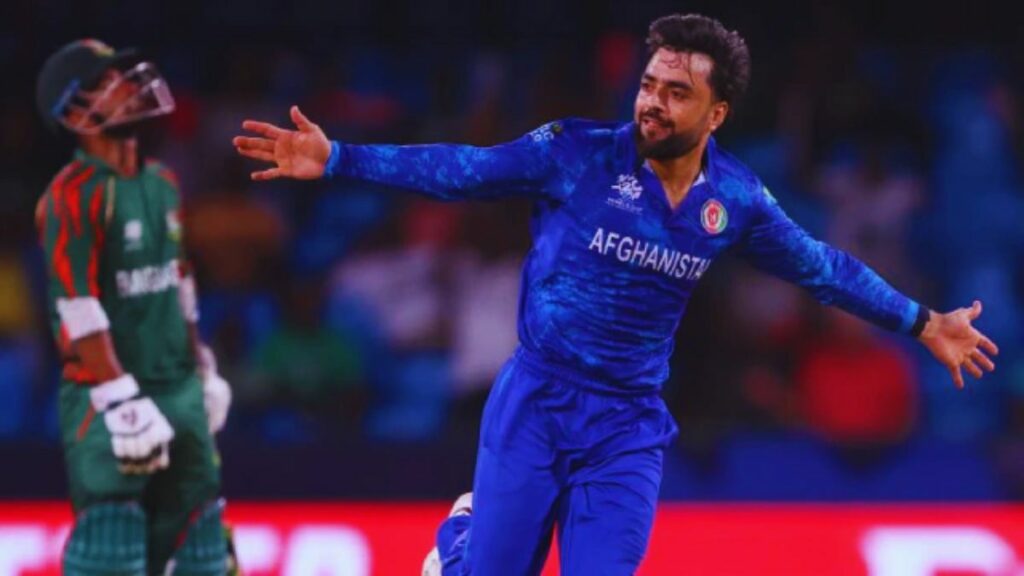
Cricket fans around the world witnessed a special moment on Monday, February 16, 2026, when Rashid Khan became the first bowler ever to take 700 wickets in T20 cricket. The Afghanistan captain reached this incredible milestone during the ICC Men’s T20 World Cup 2026 group stage match between Afghanistan and UAE at the Arun Jaitley Stadium in Delhi.
The Historic Moment
The 700th wicket came in the 16th over of the UAE innings when Rashid Khan dismissed Muhammad Arfan. Walking into the match with 699 wickets already in his bag, the Afghan spinner knew he was just one wicket away from creating history. However, the moment arrived without much celebration from Khan himself. His focus remained on helping his team win the match and secure their place in the Super Eights stage of the tournament.
The lack of celebration showed Rashid Khan’s dedication to his team’s success over personal achievements. While breaking records is important, winning matches for Afghanistan clearly means more to their captain. This attitude has been a key part of his leadership style since taking over as captain.
The Journey to 700 Wickets
Rashid Khan’s journey to this landmark began in 2015 when he first started playing T20 cricket. Over the past eleven years, he has played matches all over the world, representing Afghanistan in international cricket and various teams in T20 leagues across different countries. His consistent performance in all these matches has helped him reach this number faster than anyone else in cricket history.
Before this match, Rashid had to wait longer than expected for his milestone. He picked up his previous few wickets during a match against South Africa last week. Coming into the UAE game, the entire cricket world was watching to see when he would get that special 700th wicket.
Breaking the World Record Earlier
Interestingly, Rashid Khan had already broken the world record for most T20 wickets before reaching the 700 mark. This record-breaking moment happened during the SA20 2025 tournament in South Africa. At that time, he went past the previous record holder to become the bowler with the most wickets in T20 cricket history. The 700-wicket milestone is just another step in his amazing career.
The SA20 tournament provided the perfect stage for Rashid to break the record. Playing in front of passionate South African crowds, he continued his excellent form and kept taking wickets match after match. Since then, he has added more wickets to his total, eventually reaching this special number of 700.
Leading the Wicket-Taking Charts
When we look at the list of bowlers with the most T20 wickets, Rashid Khan stands way ahead of everyone else. His 700 wickets put him far in front of the second-placed bowler, Dwayne Bravo from the West Indies, who has 631 wickets. The gap between first and second place is 69 wickets, which shows just how far ahead Rashid is from the rest.
Sunil Narine, another West Indian bowler, sits in third place with 574 wickets. The difference between Rashid and Narine is 126 wickets, which is quite large. Other notable bowlers in the top ten include Imran Tahir with 531 wickets, Shakib Al Hasan with 492 wickets, and Andre Russell with 466 wickets.
Understanding the Numbers
Looking at Rashid Khan’s statistics, his average is 18.07, which means he gives away about 18 runs for every wicket he takes. This is an excellent average in T20 cricket, where batsmen often score quickly and freely. His economy rate of 6.49 shows that he gives away less than 6.5 runs per over, which is also very good in the shortest format of the game.
Comparing his numbers with other top wicket-takers, we can see why he is so successful. Dwayne Bravo has an average of 24.48 and an economy of 8.26, while Sunil Narine has an average of 21.66 and an economy of 6.12. Rashid’s ability to take wickets while keeping the runs down makes him very valuable to any team he plays for.
Dominance in T20 International Cricket
Rashid Khan’s success is not limited to just all T20 cricket. He also leads the list of highest wicket-takers in T20 International matches, which are games played between countries. In this format, he is followed by New Zealand’s Tim Southee, who has taken 164 wickets, and another New Zealand bowler, Ish Sodhi, who has 162 wickets.
The gap between Rashid and the second-placed bowler in T20 Internationals is even bigger than in overall T20 cricket. This shows that he performs well not just in league cricket but also when representing his country. Playing for Afghanistan, he has been their main bowler for many years and has helped them win matches against stronger teams.
The Impact on Afghanistan Cricket
Since making his debut in 2015, Rashid Khan has been the face of Afghanistan cricket. He has helped put his country on the world cricket map through his performances. Afghanistan has grown as a cricket nation over the past decade, and Rashid’s success has played a big part in this growth.
As captain, he now has the responsibility of leading his team in major tournaments like the T20 World Cup. The pressure of captaincy and playing does not seem to affect his bowling, as he continues to take wickets regularly. His leadership on the field helps younger Afghan players learn and improve their game.
Playing Around the World
One reason for Rashid Khan’s high wicket count is his participation in T20 leagues around the world. He has played in the Indian Premier League (IPL), Big Bash League (BBL) in Australia, Caribbean Premier League (CPL), Pakistan Super League (PSL), SA20 and many other tournaments. Each league gives him the chance to bowl to different batsmen in different conditions.
This experience of playing everywhere has made him a better bowler. He has learned to adjust his bowling based on the pitch, weather, and type of batsmen he faces. Whether it’s the slow, turning pitches in India or the fast, bouncy ones in Australia, Rashid finds ways to take wickets.
The Leg-Spinner’s Art
Rashid Khan bowls leg-spin, which is a type of spin bowling where the ball turns from the leg side to the off side for a right-handed batsman. Leg-spin is considered one of the hardest skills to master in cricket, but also one of the most effective when done well. Rashid has perfected this art over the years.
What makes him special is his variations. He doesn’t just bowl regular leg-spinners but also mixes in googlies, flippers, and other deliveries that confuse batsmen. His quick arm action means batsmen have less time to pick which ball he is bowling, making it harder to score runs against him.
Comparison with Cricket Legends
When we compare Rashid Khan with some of the greatest bowlers in the table, it’s clear he belongs among the best. Dwayne Bravo, who has 631 wickets, played from 2006 to 2024, which is eighteen years. Sunil Narine has played from 2011 to 2025, which is fourteen years. Both have had long careers, but neither has reached 700 wickets.
Lasith Malinga, the great Sri Lankan fast bowler, has 390 wickets from his career spanning 2004 to 2020. Malinga was known as one of the best T20 bowlers ever, but Rashid has almost double his wicket count. This comparison shows how special Rashid’s achievement really is.
Recent Form Leading to the Milestone
In the weeks before reaching 700 wickets, Rashid Khan was in good form. His match against South Africa, where he picked up some of his recent wickets, showed he was bowling well. Coming into the World Cup, he was one of the bowlers to watch, and he has not disappointed.
The World Cup 2026 has been an important tournament for Afghanistan. They are trying to qualify for the Super Eights stage, and every match matters. Having their captain in form and taking wickets gives the team a better chance of success. The victory against UAE, where he reached his milestone, was important for their campaign.
The 700-Wicket Club
With this achievement, Rashid Khan has created an exclusive club – the 700-wicket club in T20 cricket. Right now, he is the only member of this club. It remains to be seen how long he will be the only one, but given the gap between him and the second-placed bowler, it might be a while before anyone else reaches this mark.
Related posts: