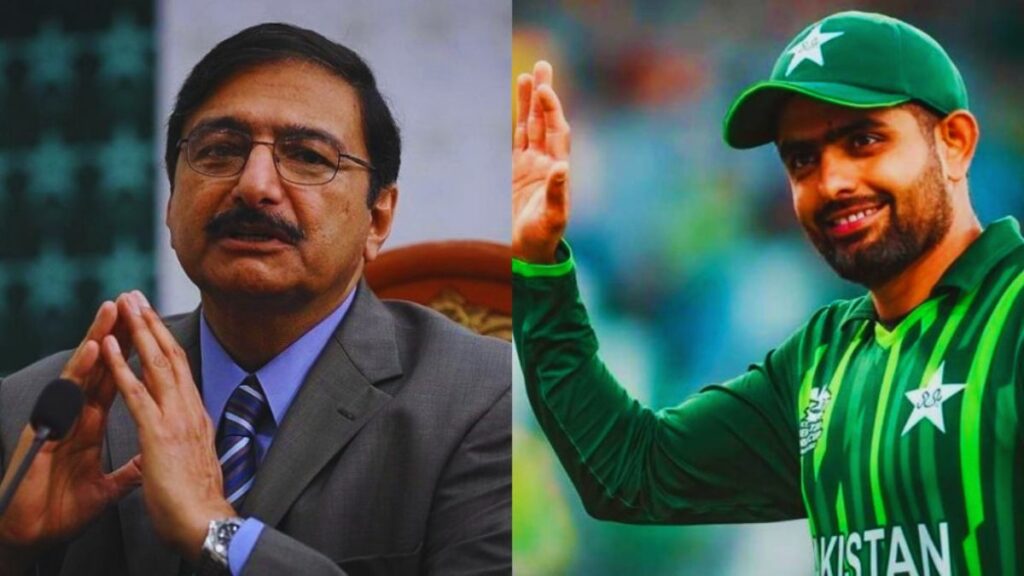
The Pakistan Cricket Board (PCB) management committee head, Zaka Ashraf, has come under scrutiny for leaking personal WhatsApp messages of Pakistan’s cricket captain, Babar Azam, during a live TV broadcast. The move has sparked ethical concerns, as it remains unclear whether Babar Azam granted permission for his private messages to be shared in such a public manner.
Also Read: ICC CWC 2023: Men in Blues regain Top spot with a fantastic 100-run win over England
The incident began when former Pakistani cricket team wicketkeeper, Rashid Latif, alleged that Ashraf was ignoring Babar Azam’s attempts to contact him. These claims set off a chain of events that have raised questions about the boundaries between public and private communication in the world of professional sports.
Shameful act done by @ARYNEWSOFFICIAL by leaking Babar Azam private WhatsApp messages on national tv. I agree on the manager conflict of interest bit but doing this is utter shameful act expected better from Mr Waseem badmi.@WaseemBadamipic.twitter.com/6Y0chDPXjH
— Mustafa 🇵🇸 (@mustafasays__) October 29, 2023
Ashraf swiftly denied these allegations, asserting that the Pakistan captain had never made direct contact with him. “He [Latif] says that I don’t pick up his [Babar’s] call,” Ashraf clarified. “He’s never given me a call. The chief operating officer or the director of international cricket are expected to speak with the captain of the team.”
However, Ashraf’s actions to support his side of the story took a startling turn. During an interview with a local news channel, he shared a private WhatsApp conversation between PCB’s Chief Operating Officer, Salman Naseer, and Babar Azam, which was broadcast live on television.
The leaked conversation revealed Naseer’s message to Babar, asking whether the captain had recently tried to contact Ashraf, amid rumours that his calls were going unanswered. In response, Babar Azam said, “Salam Salman bhai, I have not made any call to sir.”
My humble thoughts on Babar Azam – Zaka Ashraf issue 🙏🙏🙏 pic.twitter.com/g7RwamSP54
— Waseem Badami (@WaseemBadami) October 29, 2023
The revelation of these private messages raised concerns not only about the privacy of the athletes but also about the ethical standards within the PCB. Azhar Ali, a former cricketer for Pakistan, questioned whether Babar Azam had given his consent for the release of his private communication, either to the PCB chief or the TV program, before it was broadcast live on air.
Following the public outrage and questioning of the decision to disclose Babar’s messages, the host of the program, Waseem Badami, took to social media to issue an apology. He explained that they had initially been hesitant to make the conversation public but had ultimately decided to do so after obtaining permission from the PCB chief. Nevertheless, Badami emphasized that the channel had made a mistake by airing the chat and sincerely apologized for their error.
As this controversy continues to unfold, it raises important questions about the code of ethics governing sports organizations and the need for greater transparency and accountability within the Pakistan Cricket Board. The protection of players’ privacy, even in the public eye, remains a paramount concern in this digital age, where personal communication can be laid bare for the world to see.
Related posts: