FIFA has finally backed down. After days of anger and pressure from football bodies around the world, FIFA President Gianni Infantino has confirmed that he will not go ahead with his plan to sell a part of FIFA’s business to outside investors. The decision comes after UEFA, the governing body of European football, voted to boycott FIFA competitions if the plan was pushed through.
This entire episode has turned into one of the biggest controversies in football administration in recent years. From secret talks to public resignations, the story kept growing bigger with each passing day. Here is everything that happened, step by step.
What Was FIFA’s Original Plan?
The plan was first announced on a Tuesday and immediately caught the attention of the entire football world. FIFA wanted to sell close to a 20 percent stake in a new business unit. This unit would be responsible for running FIFA’s biggest events, including the World Cup itself.
Through this deal, FIFA hoped to raise as much as $4.2bn. The entire new business unit was valued at a massive $20bn. The plan involved bringing in private investors to be part of FIFA’s biggest money-making event, something that had never really happened at this scale before in football.
Why Did UEFA Threaten To Boycott FIFA?
As soon as the plan became public, UEFA strongly opposed it. On Thursday, UEFA members voted to boycott FIFA competitions if Infantino continued with his investment plan. This was a huge step, since UEFA represents some of the biggest and most powerful football nations in Europe.
In its official statement, UEFA said it was “irresponsible and indefensible” that such a big proposal was planned in secret, without proper discussion with football’s stakeholders. UEFA went a step further and accused FIFA of trying to sell the very “soul” of the sport by handing part of the World Cup business to outside investors.
This threat of a boycott put massive pressure on FIFA and Infantino, since a boycott by European nations could have caused serious problems for future FIFA tournaments and competitions.
FIFA Stayed Defiant At First
Interestingly, FIFA did not immediately back down after UEFA’s boycott threat. In fact, reports from Friday showed that FIFA was still standing firm on its plan, even after UEFA’s vote. FIFA’s stance at the time was clear: nobody is selling football, and the plan was simply about smart business growth, not about giving away control of the sport.
This defiant response, however, did not calm things down. Instead, more voices from within and outside FIFA began speaking out against the plan, adding more pressure on Infantino to change his decision.
Infantino’s Own Adviser Resigns
One of the biggest blows to Infantino’s plan came from within his own team. Carlos Cordeiro, who served as Infantino’s senior adviser, resigned from his position with immediate effect on Friday. Cordeiro did not hold back in his comments, calling the entire investment plan “a bad deal for football.”
Along with this resignation, FIFA’s own Chief Operating Officer, Kevin Lamour, made a shocking claim. He said that FIFA staff members had been “deceived” by Infantino over the plan. Lamour went on to describe the entire proposal as a “project of one person,” suggesting that it was Infantino’s personal idea rather than something that had proper support or backing from FIFA as an organisation.
These comments from senior figures inside FIFA added a new layer to the controversy, showing that even people close to Infantino were not comfortable with how the deal was handled.
Political Reactions Add To The Pressure
The controversy did not stay limited to football circles alone. British Prime Minister Andy Burnham also weighed in, telling reporters on Friday that Infantino was “the wrong man to lead the organisation.” Coming from a sitting Prime Minister, this comment added even more weight to the growing criticism against Infantino.
Adding another twist to the story was the connection to Joshua Kushner, founder of Thrive Capital. Under the original plan, Kushner was expected to lead the new investment venture through a fund called Thrive Eternal. Joshua Kushner is the brother of Jared Kushner, who is the son-in-law of US President Donald Trump. This family connection quickly raised questions about political influence behind the deal.
President Trump, however, clearly denied being involved in any conversation with Infantino regarding FIFA offering stakes to outside investors. He made this statement on Friday while speaking to reporters at Camp David.
Infantino’s Relationship With Trump Under The Spotlight
This was not the first time Infantino’s closeness with Trump had drawn attention. Infantino was already facing questions about his relationship with the US President during the recent 2026 World Cup, which was jointly hosted by the United States, Canada and Mexico.
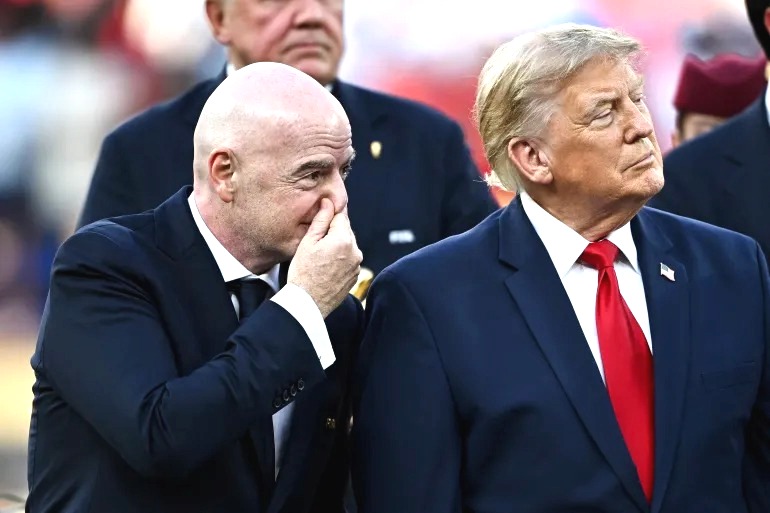

During the tournament, Trump had revealed that he personally called Infantino regarding a red card shown to USA star Folarin Balogun. Following that call, the suspension on Balogun was lifted, allowing him to play in his country’s next World Cup match. This incident had already raised eyebrows about how much influence political figures may have had on football decisions during the tournament.
FIFA Finally Scraps The Plan
With pressure building from every direction, from UEFA’s boycott threat to resignations within FIFA and criticism from political leaders, Infantino finally made the call to drop the plan altogether. In his statement released late on Friday evening, Infantino said, “Having listened carefully to all the views, it has become clear that the project has created divisions of a nature that, regardless of the level of support, are no longer in the interest of the objective set out in the first place.”
He further added, “Our purpose has always been – and will always be – to unite and improve. As a result, this proposal will not proceed.”
With these words, FIFA officially confirmed that the private investment plan was now dead, at least for the time being.
Is Infantino’s Position As FIFA President At Risk?
While Infantino managed to end the controversy by dropping the plan, the bigger question now is what this means for his position as FIFA President going forward.
The Asian Football Confederation (AFC), which has largely supported Infantino during his 11 years in charge, also joined the list of critics regarding how the plan was handled. In their official statement, the AFC pointed out that the situation exposed serious weaknesses in FIFA’s decision-making process. They said, “The plans exposed fundamental weaknesses in FIFA’s consultation and decision-making processes that must now be addressed,” and further called on FIFA to carry out an urgent review of its governance structure.
Adding to this, Sheikh Salman bin Ebrahim Al Khalifa, the long-serving president of the AFC, also spoke out strongly against the plan. Sheikh Salman, who had narrowly lost the FIFA presidential election to Infantino back in 2016, called the plan “totally unacceptable.” He added that FIFA’s actions appeared to undermine the basic principles of continental football, which are built on solidarity, cooperation and transparency.
Another name that has come up during this entire episode is Victor Montagliani, the head of North American football. Reports suggest that Montagliani could be a serious contender to challenge Infantino in the upcoming FIFA presidential election.
What Comes Next For The FIFA Election?
Infantino had already announced back in April that he intends to seek a fourth term as FIFA President. The election for this position is scheduled to take place in Morocco on March 18 next year. Before that, any candidate wishing to stand against Infantino must formally declare their candidacy by November 18, since FIFA has 211 member associations who will take part in this vote.
Until this controversy broke out, Infantino was widely expected to run unopposed, largely due to the overall success of the recent World Cup held across the US, Canada and Mexico. However, the events of the past week have clearly changed the mood within football’s governing bodies, and questions about Infantino’s leadership style are now being asked more openly than before.
For now, FIFA’s private investment plan is officially off the table. But the bigger story of trust, leadership and control within world football’s top governing body appears far from over.