Sportzcraazy

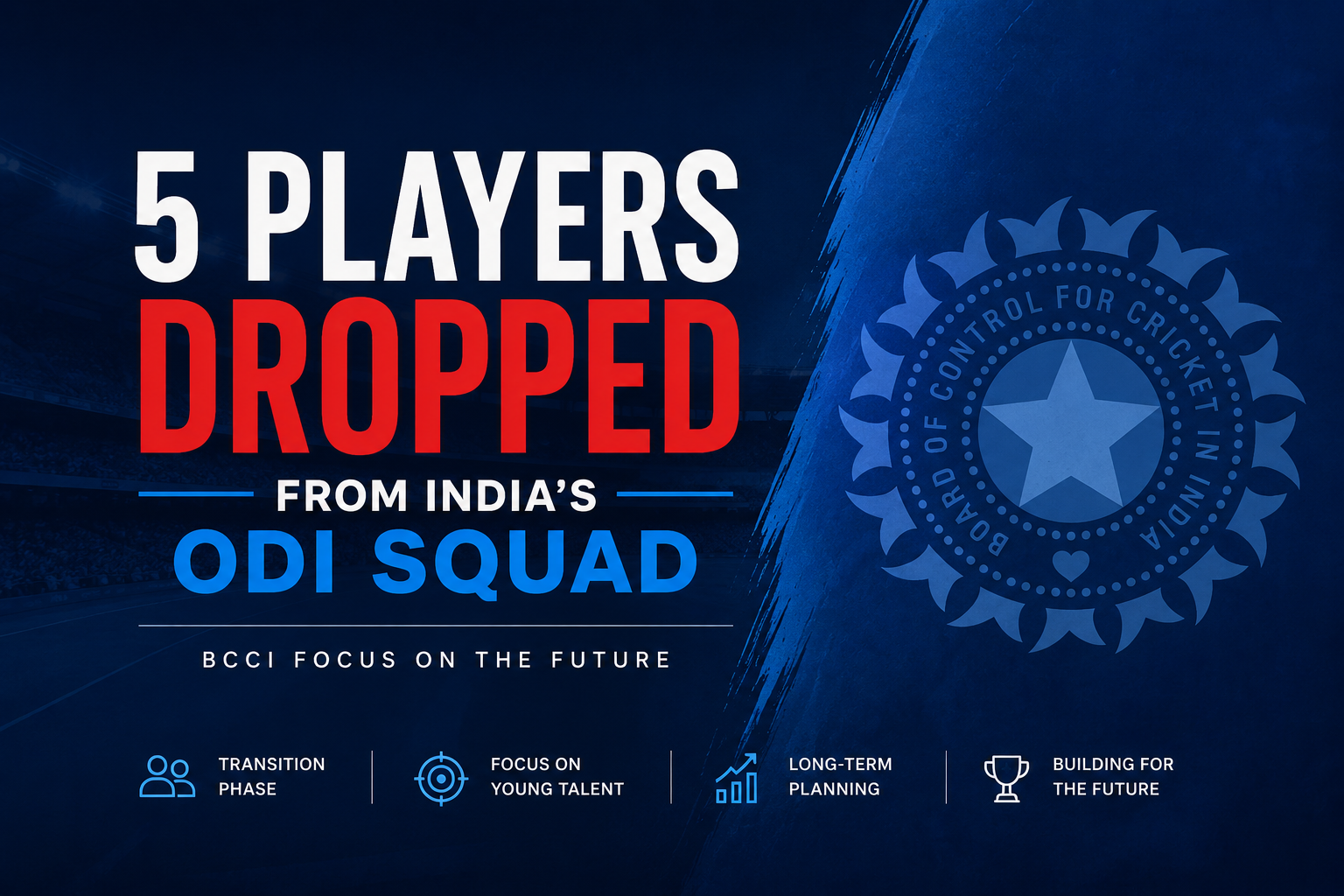
BCCI’s ODI Transition: 5 Indian Cricketers Dropped From Future Plans

The Indian cricket team’s ODI setup is slowly entering a transition phase ahead of the next major ICC events, and the latest developments around team selection clearly indicate that several experienced names are no longer part of the Board of Control for Cricket in India long-term planning. Among the players who appear to have fallen out of contention in the Indian 50-over setup are Umesh Yadav, Ravi Bishnoi, Yuzvendra Chahal, Shardul Thakur, and Nitish Rana. While none of these players have officially announced retirement from the format, their absence from recent ODI discussions, bilateral series planning, and future core combinations strongly suggests that the management is now looking in a different direction.

  1. Umesh Yadav: 

Veteran fast bowler Umesh Yadav was once considered one of India’s most aggressive pace options, especially in conditions that offered reverse swing and extra bounce. His ability to generate speed made him an important figure in Indian cricket during multiple phases of transition. However, with India now focusing heavily on younger fast bowlers who can contribute consistently across formats, Umesh has gradually slipped down the pecking order. Injuries, workload management, and increasing competition from emerging pacers have further complicated his chances of making a comeback into the ODI side.

 2. Ravi Bishnoi: 

Ravi Bishnoi’s exclusion has surprised several fans because the leg-spinner was once viewed as a future white-ball specialist for India. Bishnoi possesses wicket-taking ability and has consistently impressed in T20 cricket with his variations and attacking mindset. However, the ODI format demands greater control, patience, and consistency over longer spells, and India’s management currently appears more inclined toward spinners who offer batting depth or extensive experience in pressure situations. With players like Kuldeep Yadav and Axar Patel strengthening their positions, Bishnoi has found it difficult to establish himself in the 50-over structure.

3. Yuzvendra Chahal:

Yuzvendra Chahal’s situation remains one of the most discussed topics among Indian cricket supporters. For many years, Chahal was India’s leading wicket-taking spinner in limited-overs cricket and formed a highly successful partnership alongside Kuldeep Yadav. Despite his experience and proven match-winning ability, Chahal has increasingly remained outside India’s ODI plans over the last two years. Team management has prioritized all-round balance, improved fielding standards, and batting flexibility, areas where other players currently offer greater advantages. Although Chahal continues to perform in franchise cricket, his opportunities in the national ODI setup now appear extremely limited.

4. Shardul Thakur: 

Shardul Thakur’s omission reflects India’s changing approach toward pace-bowling all-rounders. Thakur earned recognition because of his knack for taking crucial wickets and contributing useful runs in pressure situations. He played several impactful innings and delivered breakthrough spells during important matches for India across formats. However, inconsistency with the ball and fluctuations in overall fitness have affected his continuity in the ODI side. India’s selectors now seem focused on players who can provide greater control during middle overs while also maintaining stronger batting reliability lower down the order. This strategic shift has reduced Shardul’s role within the current ODI framework.

5. Nitish Rana: 

Nitish Rana is another player who appears to have moved out of India’s immediate 50-over calculations. Despite being a consistent domestic performer and a dependable figure in franchise cricket, Rana never fully managed to cement his position in the national side. India’s middle-order competition has remained extremely intense, with several younger players delivering impactful performances in recent years. The emergence of aggressive batting talents combined with the presence of established senior players has made opportunities increasingly limited for Rana in the ODI structure.

The exclusion of these five players highlights a broader transition currently taking place within Indian cricket. The team management is clearly preparing for the future by investing in younger players, multi-dimensional cricketers, and athletes capable of adapting quickly to modern white-ball demands. Fitness, versatility, fielding standards, and role clarity have become critical selection parameters in today’s ODI cricket ecosystem.

At the same time, it is important to acknowledge that Indian cricket has historically seen experienced players return strongly after being overlooked for certain periods. Strong domestic performances, injuries to first-choice players, or changes in team strategy can always reopen doors. Therefore, while these five cricketers presently appear outside India’s core ODI setup, the unpredictable nature of international cricket means opportunities could still emerge in the future.

For now, though, the message from the selectors seems relatively clear. India’s ODI structure is evolving rapidly, and competition for places has become more intense than ever before. As preparations continue for upcoming ICC tournaments, the management appears determined to build a younger, more dynamic, and strategically flexible squad capable of sustaining long-term success in international cricket.

The coming months will be extremely important for these players because consistent domestic performances and strong franchise seasons remain their best route back into national contention. Indian cricket continues to reward performers who maintain hunger, discipline, and adaptability, even after temporary setbacks or absences from the international stage.

Player Role Reason Behind ODI Exclusion Current ODI Status
Umesh Yadav Fast Bowler Increasing competition from younger pacers, injuries, workload concerns, and shift toward long-term pace options Largely out of India’s ODI plans
Ravi Bishnoi Leg Spinner Struggled to establish consistency in 50-over format, limited batting depth compared to other spin options Not part of current ODI core
Yuzvendra Chahal Leg Spinner Team management preferring all-round balance, fielding standards, and batting flexibility ODI comeback chances currently limited
Shardul Thakur Bowling All-Rounder Inconsistent bowling performances and changing team strategy toward more reliable all-round options Slipped down ODI pecking order
Nitish Rana Middle-Order Batter Intense middle-order competition and emergence of younger batting talents Outside immediate ODI contention


Frequently Asked Questions (FAQs)
Q1. Why have these players disappeared from India’s ODI setup despite having international experience?

The Indian ODI team is currently going through a major transition phase where the selectors and team management are prioritizing younger, multi-dimensional, and more adaptable players for long-term planning. Modern ODI cricket now demands strong fitness standards, aggressive fielding, batting depth, and role flexibility from every player in the squad. While experienced players like Umesh Yadav, Yuzvendra Chahal, and Shardul Thakur have delivered important performances for India in the past, the management appears focused on building a squad that can consistently perform in high-pressure ICC tournaments over the next few years. Competition for places has also become extremely intense because several younger cricketers are performing consistently in domestic cricket, IPL, and India A setups. As a result, even experienced names are finding it difficult to regain their place once they are dropped from the main ODI combination.
 

Q2. Can these players still make a comeback into India’s ODI squad in the future?

Yes, comebacks in Indian cricket are always possible, especially for players with international experience and proven match-winning ability. Indian cricket has witnessed several examples where players returned strongly after being ignored for long periods. Injuries to first-choice players, changes in team strategy, or exceptional domestic performances can quickly reopen opportunities at the international level. Players like Chahal and Shardul still possess valuable white-ball experience, while Ravi Bishnoi remains young enough to develop further in the ODI format. However, the road back will not be easy because India’s selection competition is currently stronger than ever. To return, these players will need consistent performances in domestic tournaments, IPL seasons, and whenever opportunities arise in unofficial or India A competitions.


There have been several Omissions like- Mohammad Shami and Bhuvneshwar Kumar who for no reasons have been out from ODI Squad.

It seems that all these players are not going to get back in the shortest format of the game.


Frequently Asked Question Answer
Q1. Why have these players disappeared from India’s ODI setup despite having international experience? The Indian ODI team is currently going through a major transition phase where the selectors and team management are prioritizing younger, multi-dimensional, and more adaptable players for long-term planning. Modern ODI cricket now demands strong fitness standards, aggressive fielding, batting depth, and role flexibility from every player in the squad. While experienced players like Umesh Yadav, Yuzvendra Chahal, and Shardul Thakur have delivered important performances for India in the past, the management appears focused on building a squad that can consistently perform in high-pressure ICC tournaments over the next few years. Competition for places has also become extremely intense because several younger cricketers are performing consistently in domestic cricket, IPL, and India A setups. As a result, even experienced names are finding it difficult to regain their place once they are dropped from the main ODI combination.
Q2. Can these players still make a comeback into India’s ODI squad in the future? Yes, comebacks in Indian cricket are always possible, especially for players with international experience and proven match-winning ability. Indian cricket has witnessed several examples where players returned strongly after being ignored for long periods. Injuries to first-choice players, changes in team strategy, or exceptional domestic performances can quickly reopen opportunities at the international level. Players like Yuzvendra Chahal and Shardul Thakur still possess valuable white-ball experience, while Ravi Bishnoi remains young enough to develop further in the ODI format. However, the road back will not be easy because India’s selection competition is currently stronger than ever. To return, these players will need consistent performances in domestic tournaments, IPL seasons, and whenever opportunities arise in unofficial or India A competitions.


Exit mobile version