Pickleball in India is no longer a niche weekend pastime played quietly inside gated communities and club backyards. It is steadily entering the country’s mainstream media ecosystem — and that shift could redefine the sport’s long-term trajectory.
Over the last few years, coverage of pickleball has expanded meaningfully across television, OTT platforms, radio, and digital-first media brands. What was once sustained by word-of-mouth growth and urban recreational leagues is now receiving structured visibility. In modern sport, media presence is not just promotion — it is validation.
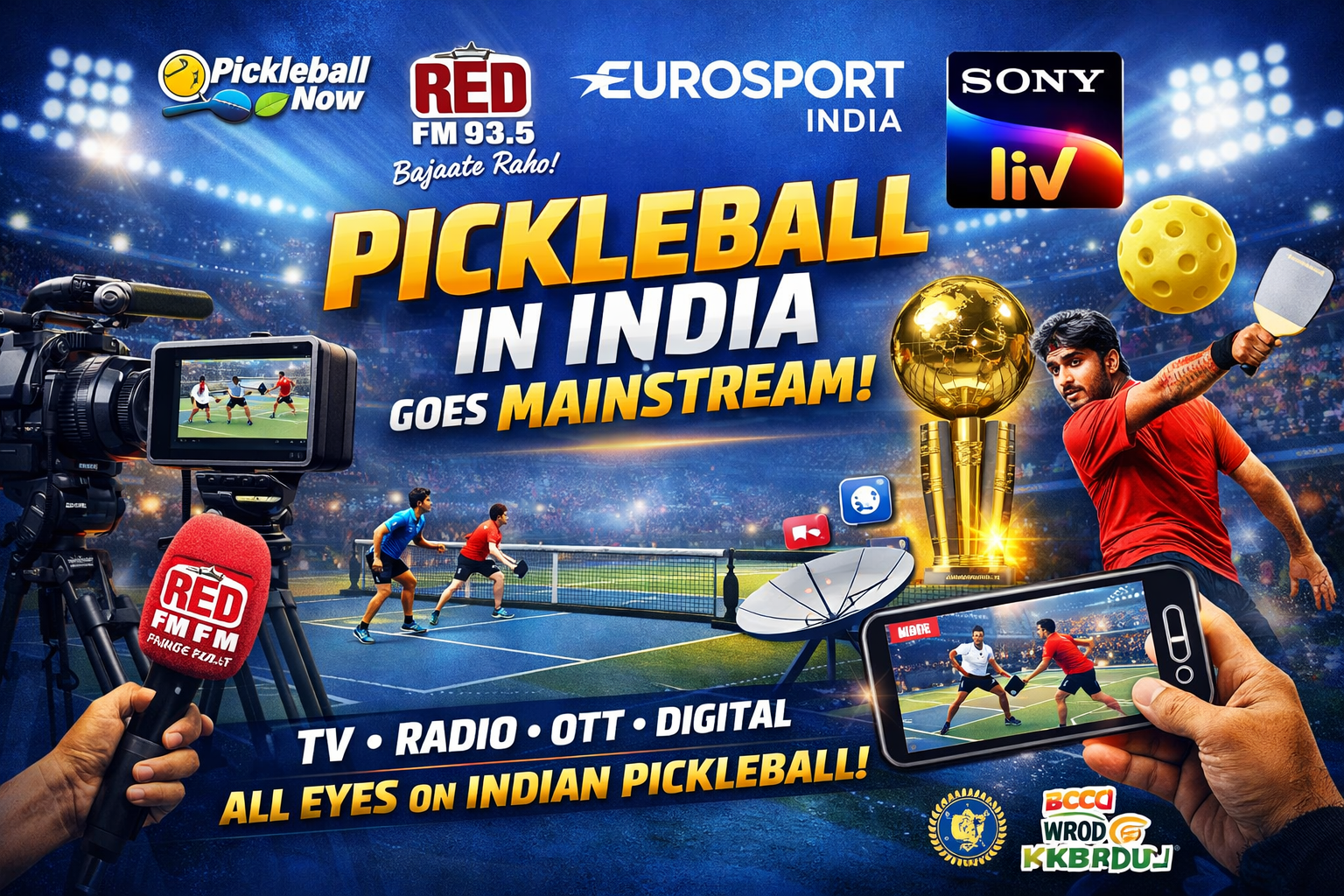

Broadcast & OTT: The First Layer of Legitimacy
One of the strongest indicators of this transition is the involvement of major broadcasters. When a network like Eurosport India steps in to cover pickleball, it signals that the sport has moved beyond hobby status. Television exposure brings credibility. It tells sponsors, investors, and sporting institutions that pickleball deserves airtime alongside established disciplines.
Equally significant is the role of digital streaming platforms. Sony LIV broadcasting the World Pickleball League demonstrates that global-format pickleball content now has a viable Indian digital audience. OTT platforms thrive on demand analytics; they invest where viewership data supports scale. The decision to stream pickleball content suggests that the sport is no longer speculative — it is measurable.
OTT accessibility also removes geographic barriers. Viewers from Tier-2 and Tier-3 cities, who may not yet have access to quality courts, can still consume high-level competition. That visibility accelerates aspiration. Young athletes do not just play a sport; they emulate what they see on screen.
Radio & Brand Activation: Commercial Signals Emerging
Another powerful marker of mainstream integration is radio activation. When a mass-market station like Red FM participates through sponsorship integrations, it highlights commercial confidence. Radio networks operate on advertising economics. Their involvement indicates that brands believe pickleball audiences are monetizable.
Brand-backed integrations also push the sport into public conversation. Unlike digital algorithms that serve niche audiences, radio speaks to commuters, working professionals, and urban listeners at scale. That kind of exposure expands demographic reach beyond early adopters.
For any emerging sport, brand participation is not merely about sponsorship revenue. Once companies begin associating with a sport, it gains social legitimacy. It becomes aspirational.
Digital-First Storytelling: Identity Formation
Beyond traditional media, pickleball’s digital footprint is evolving rapidly. Platforms like Pickleball Now are playing a critical role in building community-led storytelling. Niche content ecosystems matter because they document rankings, highlight players, cover tournaments, and sustain consistent updates.
In early-stage sports markets, digital storytelling often precedes structural organization. It shapes identity before governance matures. Through interviews, match highlights, grassroots coverage, and opinion pieces, these platforms are creating an archive of Indian pickleball’s formative years.
Digital media also allows for experimentation. Short-form reels, explainer threads, community polls, and behind-the-scenes features help humanize athletes. That humanization is essential for building heroes — and heroes drive participation.
Why Multi-Platform Presence Changes the Equation
This convergence across TV, OTT, radio, and digital is not cosmetic. It has structural implications for the ecosystem.
1. Legitimacy
Sponsors prefer sports that demonstrate measurable exposure. Investors look for visibility metrics before committing capital. When pickleball appears across recognized platforms, it signals stability and growth potential.
2. Aspirational Value
When players see televised matches or streaming leagues, the pathway feels real. Aspirational value fuels grassroots demand. Schools, academies, and local clubs respond when parents and young athletes believe there is a future in the sport.
3. Commercial Confidence
Brands follow attention. Media attention accelerates funding cycles. Once viewership numbers rise and engagement metrics strengthen, sponsorship conversations shift from experimental to strategic.
Cricket’s exponential rise was institutionalized under the Board of Control for Cricket in India. Kabaddi underwent a dramatic transformation through the Pro Kabaddi League model, where structured broadcasting turned a traditional sport into a prime-time property.
While pickleball is still in its early growth phase, the early signs of media convergence are promising.
The Road Ahead: Converting Attention into Structure
However, media momentum alone is not enough. Airtime must translate into ecosystem building.
Structured ranking systems
Sustainable league formats
Financial pathways for professional players
Coaching certification programs
Grassroots tournament pyramids
Media can ignite interest, but infrastructure sustains it. If broadcasters and digital platforms continue investing, governing bodies and private stakeholders must ensure that the sporting pyramid expands simultaneously.
The encouraging part is this: pickleball is no longer invisible. It is appearing on television screens, streaming platforms, radio waves, and social feeds. That multi-layered presence creates a compounding effect.
TV brings credibility.
OTT brings accessibility.
Radio builds commercial chatter.
Digital platforms create identity.
The question now is not whether pickleball will grow in India. The more pressing question is how quickly the ecosystem can convert media visibility into structured, scalable pathways for players, leagues, and brands.
Momentum has begun. Airtime has arrived. And in the business of sport, attention is the first currency of transformation.
Indian pickleball is no longer operating in the shadows.
It is on screen. It is on air. It is online.
| ection | Key Focus | Details | Ecosystem Impact |
|---|---|---|---|
| Overall Shift | Transition from niche to mainstream | Pickleball in India is moving from gated communities and club backyards into the mainstream media ecosystem | Redefines long-term trajectory of the sport |
| Media Expansion | Multi-platform coverage | Growth across television, OTT platforms, radio, and digital-first media brands | Structured visibility replaces word-of-mouth growth |
| Validation Factor | Media as legitimacy | Media presence acts as validation, not just promotion | Signals credibility to sponsors, investors, institutions |
| Broadcast Involvement | Television exposure | Eurosport India covering pickleball | Moves sport beyond hobby status; brings credibility |
| OTT Growth | Digital streaming expansion | Sony LIV broadcasting the World Pickleball League | Confirms measurable audience demand; signals scalability |
| OTT Accessibility | Geographic reach | Viewers from Tier-2 and Tier-3 cities can watch high-level competition | Accelerates aspiration and participation |
| Radio Activation | Commercial integration | Red FM participating through sponsorship integrations | Demonstrates brand confidence and monetizable audience |
| Brand Association | Social legitimacy | Brands associating with pickleball | Elevates aspirational value and mainstream acceptance |
| Digital Storytelling | Community-led coverage | Pickleball Now building rankings, player stories, tournament coverage | Shapes identity before governance matures |
| Content Innovation | Engagement formats | Reels, explainers, polls, behind-the-scenes features | Humanizes athletes and builds heroes |
| Multi-Platform Convergence | TV + OTT + Radio + Digital | Simultaneous presence across multiple platforms | Structural shift in ecosystem maturity |
| Legitimacy Impact | Sponsor & investor interest | Visibility metrics influence capital flow | Strengthens funding cycles |
| Aspirational Growth | Player pathway visibility | Televised matches and leagues create realistic ambitions | Drives grassroots demand |
| Commercial Confidence | Brand strategy shift | Sponsorship conversations moving from experimental to strategic | Increases financial stability |
| Comparative Reference | Cricket model | Institutionalized under Board of Control for Cricket in India | Demonstrates power of structured broadcasting |
| Comparative Reference | Kabaddi model | Transformed via Pro Kabaddi League | Example of media-driven ecosystem scaling |
| Structural Requirements | Ecosystem development | Need for ranking systems, sustainable leagues, financial pathways, coaching certifications, grassroots pyramids | Converts attention into long-term structure |
| Media vs Infrastructure | Sustainability gap | Media ignites interest; infrastructure sustains growth | Balanced expansion required |
| Compounding Effect | Layered media presence | TV = credibility; OTT = accessibility; Radio = commercial chatter; Digital = identity | Accelerates sport’s mainstream integration |
| Current Status | Visibility milestone | On television, streaming platforms, radio, and social media | No longer invisible or shadowed |
| Central Question | Future trajectory | Speed of converting visibility into structured, scalable pathways | Determines long-term success |
Related posts: