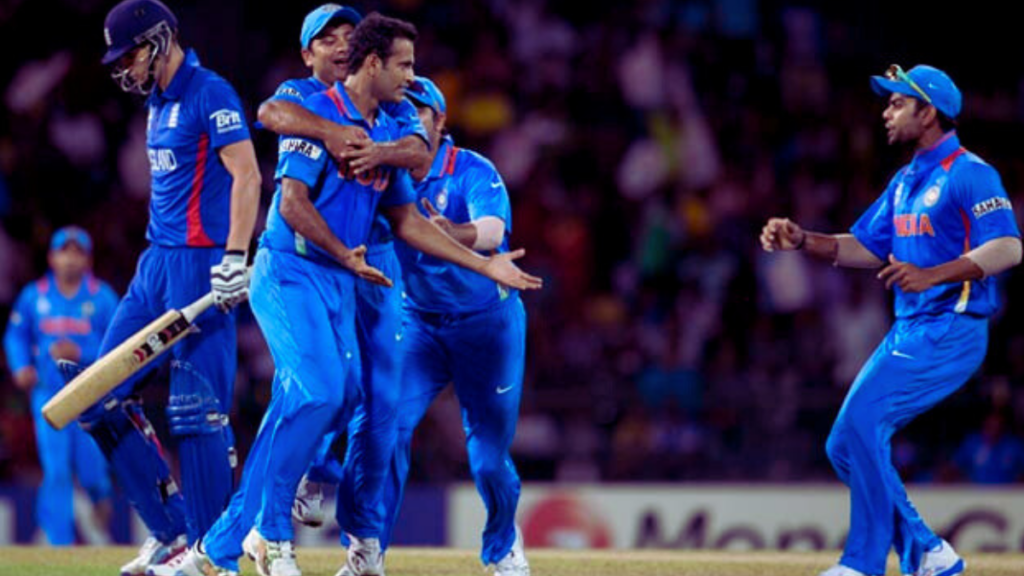
On September 23, 2012, India faced England in a historic group stage match at the ICC T20 World Cup. The match, held at R. Premadasa Stadium in Colombo, Sri Lanka, saw a great performance by the Indian squad, ending with England making their lowest ever team total in the history of the T20 World Cup.
After winning the toss, India opted to bat first and scored a challenging total of 170 runs for the loss of only six wickets. India set a challenging target for England, led by Gautam Gambhir’s 45 runs, with contributions from Virat Kohli and Rohit Sharma. The batting performance by the men in blue was fantastic after a poor start.
Also Read: What is the lowest team total by Australia in a T20 World Cup match?
However, India’s bowling assault shone brightly in this encounter. England’s batting lineup collapsed under the pressure applied by India’s bowlers. All of the Indian bowlers contributed equally to India’s remarkable win and England’s lowest total.
What made this match so remarkable was England’s poor batting performance. The English squad was bowled out for 80 runs in 14.4 overs, their lowest score in T20 World Cup history.
The Indian bowlers attacked fiercely. Harbhajan Singh was the star of the evening, as he took four wickets and ended with splendid figures of 4-2-12-4. Irfan Pathan and Piyush Chawla complemented really well, as they took two wickets apiece to put India on top in the match.
England’s batting collapse was astonishing. None of their batters could withstand the Indian bowling assault, as India cruised to an easy victory, winning by 90 runs.
The match demonstrated India’s superiority in every element of the game. Their batting was solid, and their bowling was outstanding, making this a memorable match for the Indian fans, whereas the opposite for the Englishmen. Harbhajan Singh was the player of the match for his sensational bowling spell, where he did not let the England batters get going.
In retrospect, this match remains one of the most memorable clashes in T20 World Cup history, demonstrating India’s supremacy in the format and in the 2012 T20 World Cup.