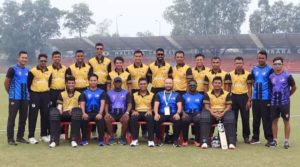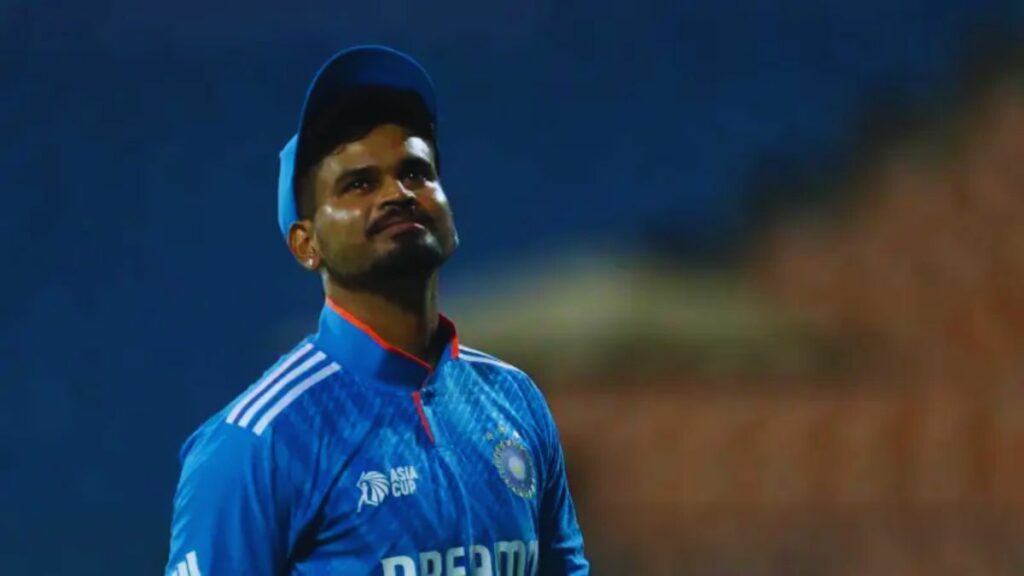
Just months ago, the Indian cricket team was celebrating a T20 World Cup title under Suryakumar Yadav. Today, the team find themselves in completely uncharted territory. Following a shock 0–2 series loss against Ireland and back-to-back defeats against England, India’s new full-time T20I captain, Shreyas Iyer, remains winless after five games at the helm. The crisis peaked at Trent Bridge with a 125-run thrashing—India’s lowest total in 18 years (76 all out) and their biggest ever defeat by runs in T20I history.
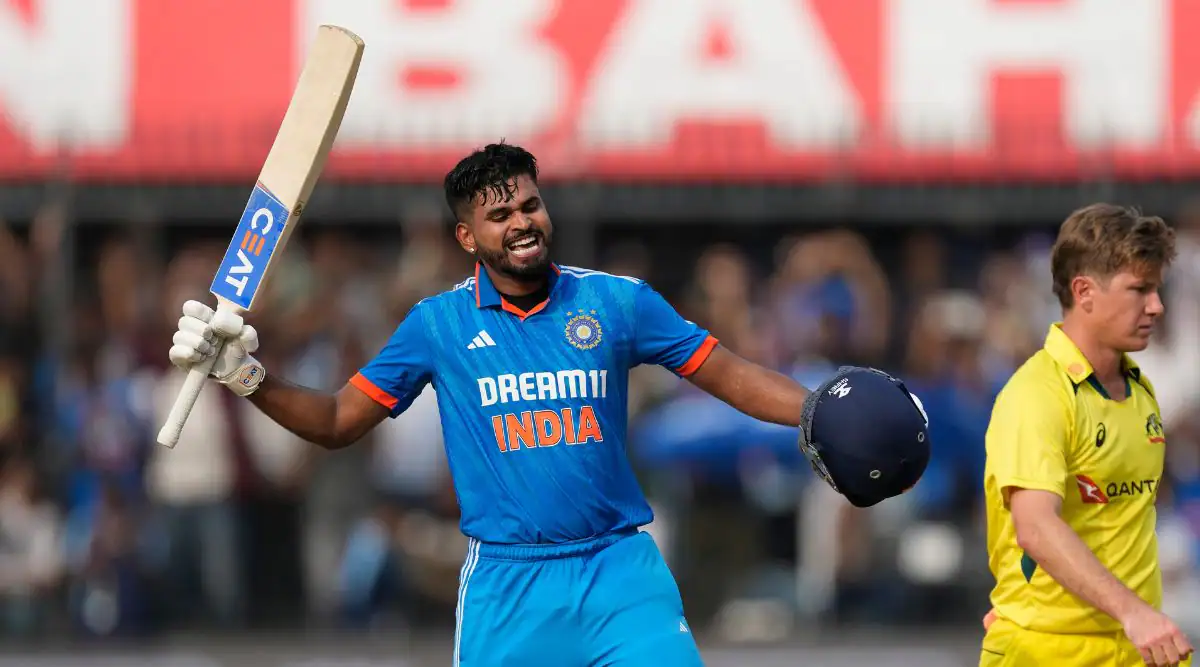

Iyer himself pulls no punches, labeling the performances as “atrocious and unacceptable.” But as head coach Gautam Gambhir navigates this “white-ball reset,” it is evident that the problem goes far deeper than just bad luck at the crease.
1. The Leadership Void and Selection Insecurity:
The root of India’s current slump lies in a sudden and massive leadership shake-up. Removing Suryakumar Yadav—who had built a highly synchronized, fearless culture within the squad—and replacing him with Shreyas Iyer has severely disrupted the team’s tactical rhythm. Iyer has not consistently featured in India’s T20I framework for a prolonged period, and throwing him directly back into the mix as the captain has created friction.
Former cricketers and analysts have heavily scrutinized the decision to appoint Iyer and Tilak Varma as captain and vice-captain. By cementing these leadership roles, the team management has effectively made them “undroppable,” stripping the lineup of flexibility. This rigid hierarchy has forced tactical casualties, most notably the dropping of established impact-players like Sanju Samson to make room for untested experiments. When players feel insecure about their spots or are led by a management still trying to discover its own identity, the field performance naturally implodes.
2. Tactical Rigidity vs. In-Game Adaptability
While Iyer has matched legends like MS Dhoni and Rohit Sharma by winning five consecutive tosses, his in-game decision-making has left much to be desired. In the recent losses, India’s bowling changes and batting order adjustments appeared reactive rather than strategic.
During the matches against England, whenever a bowler found momentum, the captaincy mysteriously pulled them out of the attack. For instance, when young Prince Yadav and Harshit Rana picked up crucial wickets and had England under pressure, they were promptly taken off, handing the opposition breathing room.
Furthermore, the batting order panic has been jarring. Sending bowling all-rounders ahead of designated finishers like Shivam Dube during a collapse reveals a team searching for answers on the fly rather than trusting a set blueprint.
3. The “IPL Hangover” on Overseas Pitches:
India’s current crop of young batters appears trapped in an “IPL frame of mind.” In the Indian Premier League, flat pitches and short boundaries heavily reward blind, relentless aggression from ball one. However, the international circuits in Ireland and England demand high-level technique, patience, and situational awareness against searing pace and swing.
Instead of adapting to the seam movement offered to bowlers like Jofra Archer and Josh Tongue, the Indian top-order has persisted with high-risk, cross-batted shots. Trying to replicate the “fearless” World Cup brand of cricket without the foundational experience or environmental adaptation has led to catastrophic results—exemplified by India losing five wickets in the Powerplay during the Trent Bridge capitulation.
4. Exposing Young Talent Too Early:
In an attempt to forcefully fast-track the transition, the management replaced seasoned pros with raw youth. The inclusion of 15-year-old batting sensation Vaibhav Sooryavanshi in place of Sanju Samson is a prime example. While Sooryavanshi’s raw talent and audacity to hit Archer for a six are unquestionable, exposing a teenager to harsh, overseas bowling conditions so early in his development is proving counterproductive. The pressure on the young squad is immense, and without an anchor in the middle order to control the collapse, the line-up folds like a house of cards.
The Verdict: Transition is an inevitable part of sport, but Gautam Gambhir and Shreyas Iyer are currently attempting a reset without clarity. India is caught between trying to copy a winning formula and playing with an entirely inexperienced unit. If Team India wants to open their account under Iyer’s captaincy, they must ditch the IPL-style bravado, fix their erratic tactical calls, and prioritize technique over blind aggression.
For a deeper dive into expert opinions on the captaincy selection, you can check out this Mohammad Kaif interview on India’s captaincy choices which highlights how these sudden leadership appointments have impacted squad selection and team flexibility.
Summary Table: What is Not Working Under Shreyas Iyer’s Captaincy
| Core Issue Area | Key Factors & Tactical Evidence | On-Field Impact & Consequences | Recommended Strategic Solution |
| 1. Leadership Void & Selection Insecurity | Suryakumar Yadav removed despite a successful, highly synchronized culture. Shreyas Iyer & Tilak Varma named captain/vice-captain, making them effectively “undroppable” and reducing strategic flexibility. | Creates squad friction and a drop in baseline team confidence. Forces tactical casualties like dropping proven impact players (e.g., Sanju Samson) to fit experimental structures. | Re-evaluate automatic selection status tied strictly to leadership roles. Prioritize immediate form, adaptability, and clear squad roles over fixed hierarchies. |
| 2. Tactical Rigidity & In-Game Decisions | Despite matching legends with 5 consecutive toss wins, on-field captaincy remains reactive. In-form bowlers are pulled out prematurely when finding rhythm. | Gives opposing teams (Ireland/England) breathing room to recover from pressure. Creates bowling volatility (e.g., pulling Prince Yadav/Harshit Rana) and batting line-up panic. | Empower the captain with objective, data-driven match-up data while encouraging flexibility. Trust successful bowling spells and avoid changing roles mid-game. |
| 3. The ‘IPL Hangover’ on Overseas Pitches | Young batters attempting blind, relentless boundary-seeking aggression suited for flat Indian pitches. Complete failure to adjust technique for high-pace, moving balls. | Catastrophic top-order collapses against seamers like Jofra Archer and Josh Tongue. Exemplified by being bowled out for 76 at Trent Bridge and losing 5 powerplay wickets. | Implement dedicated overseas acclimatization camps. Re-educate younger players on valuing their wickets, building partnerships, and playing late rather than clearing lines early. |
| 4. Premature Exposure of Raw Youth | Seasoned pros are being aggressively benched or filtered out to force a rapid “white-ball reset”. Extremely young players are being fast-tracked straight into elite away tours. | Places unsustainable mental and technical pressure on teenagers (e.g., 15-year-old Vaibhav Sooryavanshi). Leaves the team without a stabilizing middle-order anchor during collapses. | Adopt a gradual transition blueprint. Pair young prospects with experienced anchors, or restrict experimental fast-tracking to home series and lower-tier opposition first. |
Q: Why is the team struggling so drastically under Shreyas Iyer compared to the previous T20 system, and is it fair to pin all 5 consecutive losses entirely on his new leadership architecture?
A: To understand why the Indian T20 team has plummeted to a 0–5 winless start under Shreyas Iyer, one must look beyond simple bad luck and evaluate the foundational friction of a forced, systemic transition. The primary catalyst for this downturn is the structural disruption caused by shifting away from a deeply ingrained, winning ecosystem built under Suryakumar Yadav. When leadership changes abruptly, the psychological equilibrium of the dressing room alters. Iyer was handed a squad undergoing an aggressive “white-ball reset” engineered by head coach Gautam Gambhir, meaning he inherited a double-edged sword: a mandate to build a futuristic, aggressive team while working with an incredibly raw, experimental lineup that lacks international maturity.
Furthermore, pinning the blame solely on Iyer’s captaincy oversimplifies a complex team failure. The primary on-field undoing is an acute technical deficiency against overseas moving balls, which analysts dub the “IPL Hangover.” Young batters, accustomed to the true bounce, flat surfaces, and short boundaries of standard domestic venues, are unprepared for the lateral movement, extra bounce, and testing seam conditions presented by international attacks in Ireland and England. When high-risk, cross-batted strokes fail to execute, the top order collapses completely, leaving the team exposed. This structural weakness is exacerbated by selection choices—such as fast-tracking extremely young talent like 15-year-old Vaibhav Sooryavanshi over seasoned anchors—which strips the middle order of a stabilizing safety net. Under intense scoreboard pressure, panic sets in, and tactical rigidity follows.
That said, Iyer’s tactical stewardship cannot be completely absolved. Winning five consecutive tosses gave India the ideal opportunity to dictate terms, yet reactive on-field decisions repeatedly surrendered that advantage. His tendency to break the momentum of his own bowlers just as they found success, paired with irregular shifting of the batting hierarchy, suggests a leadership group searching for answers rather than executing a pre-planned blueprint. Therefore, the current slump is a perfect storm: it is a combination of Iyer’s adaptive learning curve as captain, the extreme technical vulnerabilities of young players stripped of local safety nets, and a management strategy that prioritizes theoretical transformation over immediate, practical stability on tough overseas pitches.
| Dynamic Category | Diagnostic Breakdown & Evidence |
| The Core Premise & Systemic Friction | Forced Systemic Transition vs. Psychological Stability: Pinning 5 consecutive defeats entirely on Shreyas Iyer’s leadership oversimplifies a deeper structural crisis. The core issue stems from the friction of moving away from a winning, highly synchronized ecosystem established under Suryakumar Yadav. When leadership changes abruptly, the team’s internal psychological equilibrium shifts. Iyer inherited a double-edged sword: a mandate for a futuristic “white-ball reset” engineered by Gautam Gambhir, combined with an experimental, raw squad lacking crucial international maturity. |
| Technical On-Field Failures | The “IPL Hangover” & Overseas Pitch Inadaptability: The primary on-field driver of India’s winless streak is an acute technical deficiency against overseas moving balls. Young players accustomed to flat Indian pitches, predictable bounce, and short boundaries struggle with lateral movement and seam conditions in Ireland and England. Persisting with high-risk, cross-batted shots rather than playing late has led to top-order collapses, leaving the squad exposed early in the innings. |
| Selection & Squad Architecture | Erosion of Stabilizing Safety Nets: Transition-era selection choices have stripped the lineup of balance. Fast-tracking raw, unexposed youth (such as 15-year-old Vaibhav Sooryavanshi) while benching seasoned anchors has removed the middle-order safety net. Without an experienced anchor to absorb pressure, minor setbacks turn into cascading collapses under scoreboard pressure, triggering panic and tactical rigidity. |
| Captaincy & Tactical Stewardship | Reactive On-Field Management: While Iyer cannot be blamed for structural gaps, his tactical execution remains heavily flawed. Despite matching legends by winning five consecutive tosses, India routinely surrendered the advantage through reactive decisions. Iyer frequently broke the momentum of his own bowlers just as they found success and shuffled the batting order irregularly under pressure, indicating a leadership group reacting to the game rather than driving a proactive blueprint. |
| The Final Verdict | The Perfect Storm: Ultimately, the 0–5 slump is a multi-causal crisis. It is a combination of Iyer’s steep learning curve as a new captain, severe technical deficiencies among young players stripped of domestic safety nets, and a rigid coaching strategy that prioritizes theoretical long-term transformation over immediate, practical match stability on demanding overseas wickets. |
Related posts: