5 Most Important Skills to Master in Pickleball in 2026
Pickleball is evolving rapidly across the world, and 2026 could become a defining year for players who genuinely want to elevate their game. What started as a recreational activity played in community courts has now developed into a highly competitive sport with professional leagues, international tournaments, and a rapidly growing fan base.
As the sport grows, so does the level of competition. Modern pickleball is faster, more strategic, and far more demanding than it was a few years ago. Players can no longer rely solely on athletic ability or quick reflexes to win matches. Instead, success now depends on mastering specific technical and tactical skills that define high-level play.
Many beginners assume pickleball is mainly about hitting powerful shots or reacting quickly at the net. While those elements certainly matter, experienced players understand that consistency, positioning, and intelligent shot selection often decide who wins and loses.
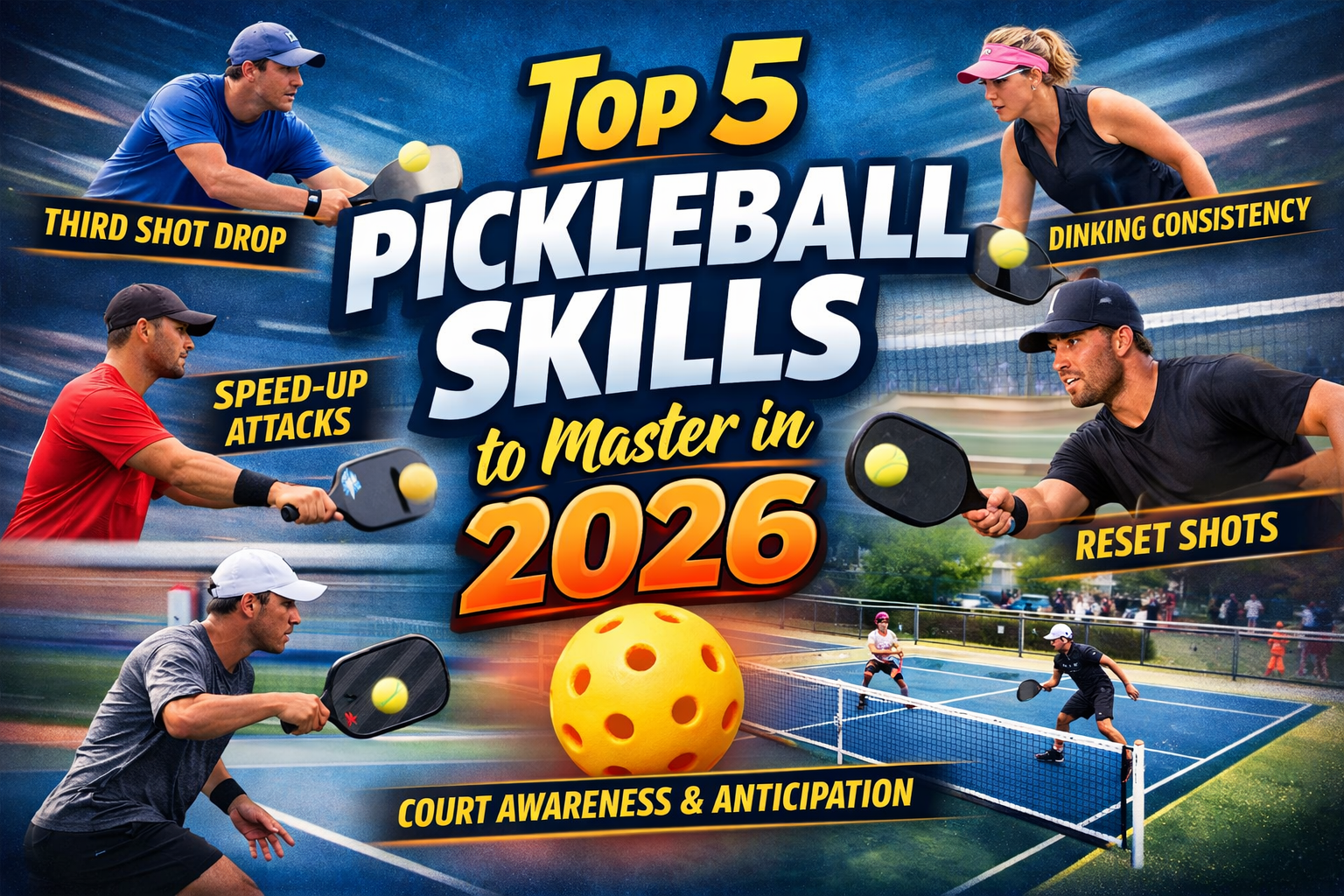
Here are five essential skills that every serious pickleball player should focus on mastering in 2026.
1. Third Shot Drop
The third shot drop is widely considered one of the most important shots in pickleball. It plays a crucial role in transitioning from defense to offense during a rally.
In a typical point, the serving team starts at a disadvantage because they are positioned deeper in the court while the receiving team is already close to the kitchen line. The third shot drop helps neutralize this disadvantage by allowing the serving team to hit a soft shot that lands in the opponent’s non-volley zone, commonly known as the kitchen.
A well-executed third shot drop forces opponents to hit upward, reducing their ability to attack aggressively. This gives the serving team enough time to move forward and establish position at the kitchen line, where most rallies are ultimately decided.
Mastering this shot requires excellent touch, control, and consistency. Players must learn how to control the arc and pace of the ball so it drops softly into the kitchen without being too high or too short.
For many players transitioning from recreational to competitive play, the ability to consistently execute the third shot drop becomes a turning point in their development.
2. Dinking Consistency
Dinking may appear simple to the casual observer, but it is one of the most important strategic elements of pickleball.
A dink is a soft shot hit just over the net into the opponent’s kitchen, forcing them to return the ball with similar touch and precision. In high-level matches, dink rallies can extend for many shots as both teams patiently wait for the right moment to attack.
Consistency in dinking requires exceptional paddle control, balance, and patience. The goal is not to hit winners but to keep the rally alive while gradually creating pressure on the opponent.
Players who maintain better control during these exchanges often force their opponents into mistakes such as hitting the ball too high or sending it into the net.
In modern pickleball, the ability to stay calm and maintain precision during long dink rallies is a major factor separating elite players from average competitors.
3. Speed-Up Attacks
While patience is essential in pickleball, there are moments when a player must shift gears and attack.
Speed-up attacks have become increasingly common in modern pickleball as players look for opportunities to surprise their opponents during dink rallies. A well-timed speed-up involves suddenly hitting the ball faster toward the opponent’s body, backhand, or the middle of the court.
These attacks work best when the opponent is slightly out of position or expecting another soft shot. Because players often stand close to the kitchen line, a sudden increase in pace can force quick reactions and lead to weak returns or outright winners.
However, executing speed-ups effectively requires excellent timing and decision-making. Attempting this shot at the wrong moment can give the opponent an easy opportunity to counterattack.
The best players understand when to stay patient and when to accelerate the pace of the rally.
4. Reset Shots
Pickleball rallies can change quickly, and even strong players often find themselves under pressure when opponents attack aggressively.
This is where reset shots become extremely valuable. A reset shot involves softly returning a fast or aggressive shot into the kitchen, effectively slowing down the rally and bringing the point back to a neutral position.
Players who develop “soft hands” can absorb the pace of an incoming shot and gently redirect the ball into the non-volley zone. This prevents the opponent from continuing their attack and allows both teams to reset the rally.
Reset shots are especially important when defending against powerful drives or speed-up attacks. Instead of trying to counter with equal power, skilled players use touch and control to regain stability in the point.
At higher levels of the game, the ability to reset the ball consistently can often determine whether a team survives a difficult rally.
5. Court Awareness and Anticipation
While technical skills are important, pickleball is also a game of awareness and strategy.
Great players do more than simply react to shots—they anticipate them. By observing an opponent’s body position, paddle angle, and court movement, experienced players can often predict where the ball is likely to go next.
This anticipation allows them to position themselves earlier and respond more effectively.
Court awareness also includes understanding spacing between partners in doubles, covering open areas of the court, and communicating effectively during rallies.

Many points in pickleball are won not because of extraordinary shots but because one team was better positioned than the other.
Players who develop strong anticipation skills often appear to have faster reflexes, but in reality, they are simply reading the game better than their opponents.
| Skill | What It Means | Why It Is Important in 2026 | Key Benefit |
|---|---|---|---|
| Third Shot Drop | A soft shot played after the serve and return that lands in the opponent’s kitchen area. | Modern pickleball emphasizes controlling the rally early. This shot helps the serving team neutralize the opponent’s advantage and move safely to the kitchen line. | Helps transition from defense to offense and gain strong court position. |
| Dinking Consistency | A controlled soft shot hit near the kitchen line during rallies. | Competitive matches now involve long dink rallies where patience and precision decide the outcome. Players who stay consistent force opponents into mistakes. | Builds pressure and creates attacking opportunities. |
| Speed-Up Attacks | A sudden fast shot during a slow rally to surprise opponents. | The modern game is faster and more aggressive. Well-timed speed-ups help break long rallies and catch opponents off guard. | Shifts momentum quickly and creates winning chances. |
| Reset Shots | A soft defensive shot that slows down the rally and returns the ball to the kitchen. | In high-level play, players face aggressive drives and attacks. Reset shots allow them to regain control of the rally instead of continuing under pressure. | Turns defense into neutral play and keeps rallies alive. |
| Court Awareness & Anticipation | The ability to read opponents, predict shots, and position yourself correctly on the court. | Strategy and positioning are becoming crucial as competition grows worldwide. Players who read the game well react faster and cover the court efficiently. | Improves decision-making and increases winning opportunities. |
Related posts: