Big Sporting Revolution in India in 2026?
In a country where sports culture has long been dominated by cricket, badminton, and increasingly football, a quiet but powerful shift is underway. Pickleball—a sport that blends elements of tennis, badminton, and table tennis—is rapidly emerging as one of India’s most exciting sporting movements. The question is no longer whether pickleball is growing, but whether it is on the verge of becoming India’s next big sporting revolution in 2026. The answer, based on current trends, is leaning strongly toward yes.

The Rise of Pickleball in India
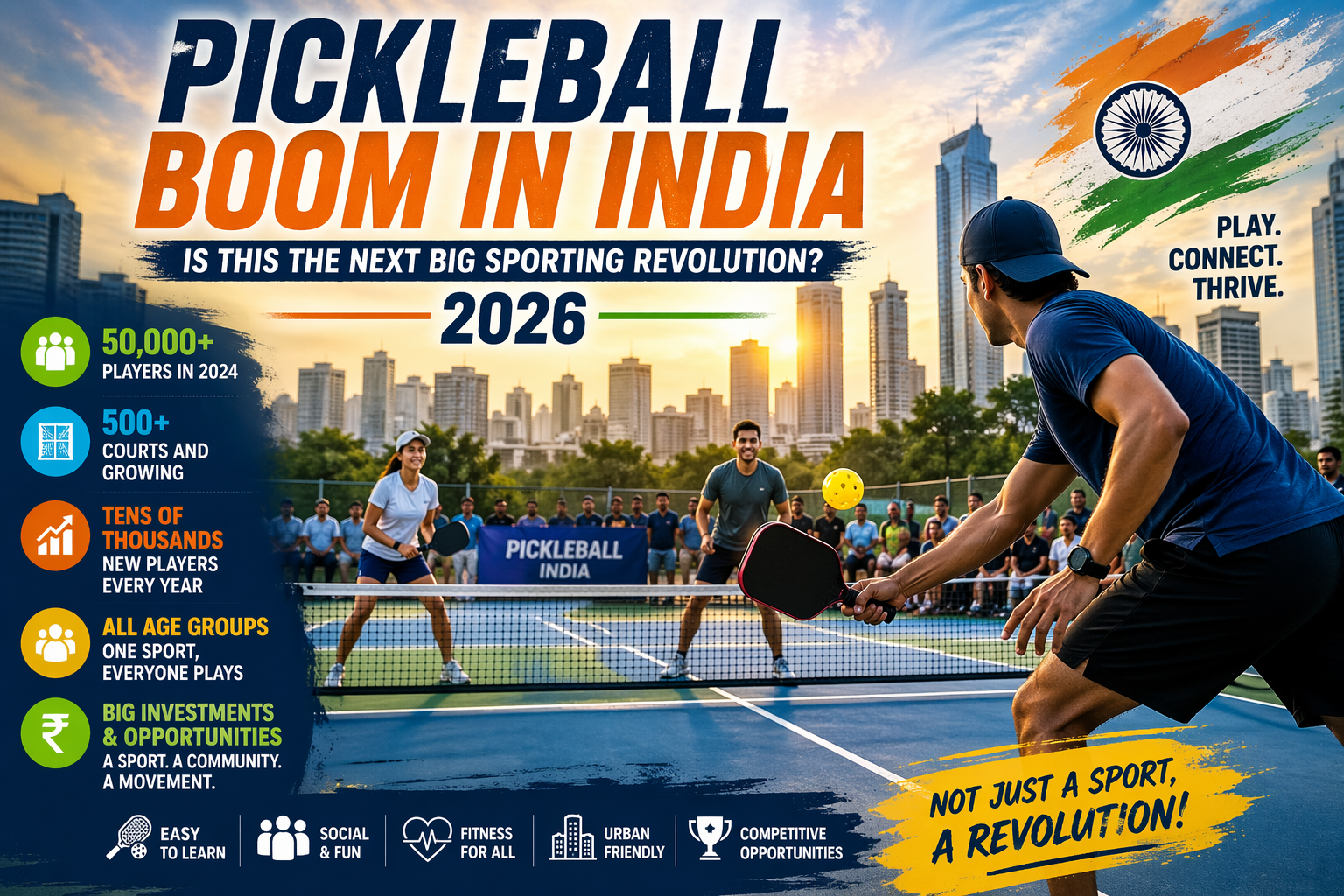
Pickleball’s journey in India began modestly in Is Pickleball the Next 2006, when it was introduced by the All India Pickleball Association (AIPA). For years, it remained a niche recreational activity played in limited pockets. However, the last five years have transformed its trajectory dramatically. By 2024, India already had over 50,000 players and more than 500 courts, with new courts being added every month.
Fast forward to 2026, and the sport is witnessing exponential growth. Industry projections suggest that tens of thousands of new players are joining the sport every year, highlighting the rapid expansion of its player base. This surge is not limited to metros like Mumbai, Delhi, and Bengaluru—it is spreading to tier-2 and tier-3 cities, making pickleball one of the most geographically inclusive sports in India today.
Why Pickleball Fits India Perfectly
One of the biggest reasons behind pickleball’s explosive growth is its perfect alignment with urban Indian lifestyles.
Unlike tennis, pickleball requires less space, making it ideal for densely populated cities. Courts can be built in unused spaces such as rooftops, school grounds, and community centers. Additionally, the sport is easy to learn, allowing beginners to enjoy rallies within minutes. This accessibility is a key growth driver, especially among working professionals looking for a quick, engaging fitness activity.
Moreover, pickleball is inherently social. Matches are short, engaging, and suitable for mixed-age groups. People across age brackets—from young professionals to older fitness enthusiasts—are actively adopting the sport, turning it into a popular after-work activity and weekend social event.
A Shift in Demographics
Globally, pickleball is no longer seen as a “retirement sport.” The average age of players has dropped significantly, with younger audiences driving the sport’s popularity.
India is witnessing a similar trend. Young professionals, college students, and even athletes from other sports are embracing pickleball. Social media has played a crucial role in this shift, with viral content, influencer participation, and celebrity endorsements accelerating awareness.
This demographic shift is critical. For any sport to become a long-term revolution, it must capture the youth—and pickleball is doing exactly that.
Infrastructure Boom and Investment
A true sporting revolution is not just about participation—it requires infrastructure, investment, and ecosystem development. Pickleball in India is ticking all these boxes.
Cities across India are rapidly building new courts, and existing sports complexes are converting tennis or badminton courts into pickleball courts to meet rising demand. Even public spaces and community facilities are beginning to accommodate the sport due to its growing popularity.
On the business side, pickleball is emerging as a lucrative opportunity. Entrepreneurs, sports startups, and investors are entering the space, launching leagues, academies, and equipment brands. The sport is gradually evolving into a structured industry with strong commercial potential.
Globally, pickleball has already become a major economic force, with equipment, facilities, and media rights contributing to its growth. India is now beginning to tap into this potential.
League Culture and Competitive Growth
One of the strongest indicators of a sport’s rise is the development of competitive leagues and tournaments. India is witnessing a surge in pickleball events—from corporate leagues to amateur tournaments and emerging professional circuits.
This growing tournament culture is essential for nurturing talent and building a professional ecosystem. As more competitions are organized, players get opportunities to improve, compete, and gain recognition.
At the global level, pickleball is also gaining legitimacy, with increasing prize money, sponsorships, and discussions around inclusion in major multi-sport events in the future. This global momentum is directly influencing India’s growth trajectory.
The Role of Community and Culture
What sets pickleball apart from many other sports is its community-driven nature. Unlike cricket or football, which often require structured training and large teams, pickleball thrives on casual participation and community engagement.
In India, this has translated into a strong grassroots movement. Corporate offices, housing societies, and fitness clubs are forming their own pickleball groups, leagues, and events. The sport is not just being played—it is being experienced as a lifestyle.
This cultural shift is crucial. A sporting revolution is not just about numbers; it’s about how deeply the sport integrates into daily life. Pickleball is increasingly becoming a part of India’s urban culture.
Challenges Ahead
While the growth is impressive, pickleball still faces challenges in India. Infrastructure, though expanding, is still limited compared to demand. There is also a lack of standardized coaching systems and clear professional pathways for athletes.
Additionally, competition from established sports like badminton and emerging ones like padel could slow its growth. However, pickleball’s simplicity and accessibility give it a unique advantage.
Final Verdict: Revolution or Trend?
Pickleball in India is no longer a passing trend—it is a rapidly evolving ecosystem. With rising participation, increasing investments, expanding infrastructure, and strong community engagement, the sport has all the ingredients of a major sporting revolution.
2026 may not yet mark the peak of pickleball in India, but it is certainly the tipping point. If the current momentum continues, pickleball could become one of India’s top participation sports within the next decade.
In simple terms: Pickleball is not just growing—it is redefining how India plays sport.
| Section | Key Insights |
| Title | Is Pickleball the Next Big Sporting Revolution in India in 2026? |
| Overview | Pickleball is rapidly emerging as a major sport in India, blending elements of tennis, badminton, and table tennis. It is transitioning from a niche activity to a potential nationwide sporting movement. |
| Introduction Context | India’s sports culture has traditionally been dominated by cricket, badminton, and football. However, pickleball is creating a new wave, especially in urban and semi-urban regions. |
| The Rise of Pickleball in India | Introduced in 2006 by AIPA. Initially niche but has seen massive growth in the last 5 years. By 2024: 50,000+ players and 500+ courts. Growth continues rapidly in 2026. |
| Growth Trend (2026) | Tens of thousands of new players joining annually. Expansion beyond metro cities into tier-2 and tier-3 cities, making it highly inclusive geographically. |
| Why Pickleball Fits India | Requires less space than tennis. Easy to learn and beginner-friendly. Can be played in rooftops, schools, and community areas. Ideal for busy urban lifestyles. |
| Social Appeal | Short matches and engaging gameplay. Suitable for all age groups. Popular as a social and recreational sport among working professionals. |
| Demographic Shift | Transition from older players to younger audiences. Youth, college students, and professionals actively participating. Social media boosting awareness and adoption. |
| Importance of Youth Adoption | Capturing youth is key for long-term sustainability. Pickleball is successfully engaging younger demographics, ensuring future growth. |
| Infrastructure Growth | Rapid increase in courts across cities. Conversion of tennis/badminton courts into pickleball courts. Growing acceptance in public and private spaces. |
| Investment & Business Opportunity | Entry of startups, entrepreneurs, and investors. Growth in academies, leagues, and equipment brands. Emerging as a structured sports industry. |
| Global Influence | Pickleball is already a major global sport with strong commercial potential. India is beginning to align with global trends and opportunities. |
| League Culture | Rise in corporate leagues, amateur tournaments, and semi-professional circuits. Increasing competitive opportunities for players. |
| Competitive Ecosystem | Tournaments helping in talent development. Players gaining exposure, recognition, and skill improvement opportunities. |
| Community & Culture | Strong grassroots movement. Played in offices, societies, and clubs. Becoming part of lifestyle and social culture in urban India. |
| Cultural Impact | Not just a sport but a social activity. Integration into daily routines and community bonding. |
| Challenges | Limited infrastructure compared to demand. Lack of standardized coaching systems. No clear professional pathway yet. |
| Competition | Competing with established sports like badminton and emerging ones like padel. |
| Key Advantage | Simplicity, accessibility, and low entry barrier make pickleball highly scalable in India. |
| Final Verdict | Not just a trend but a fast-growing ecosystem. Strong indicators of becoming a major sporting revolution. |
| Conclusion Insight | 2026 is a tipping point. With continued growth, pickleball can become one of India’s top participation sports in the next decade. |
| Closing Line | Pickleball is not just growing—it is redefining how India plays sport. |
|
|
Q1. Why is pickleball growing so rapidly in India in 2026?
Pickleball is gaining popularity in India because it perfectly matches the needs of modern urban lifestyles. Unlike traditional racquet sports, it requires less space and is easier to learn, allowing beginners to start playing almost immediately. This low entry barrier makes it attractive to people of all age groups, especially working professionals looking for a quick and fun fitness option. Additionally, the rise of social sports culture in India has played a big role. People are now looking for activities that combine fitness with networking and recreation, and pickleball fits that perfectly. The growth of courts, increasing media attention, and community-driven events are further accelerating its adoption across cities.
Q2. Can pickleball become a professional sport in India in the coming years?
Yes, pickleball has strong potential to evolve into a professional sport in India. With increasing participation, the foundation for competitive play is already being built through local tournaments and emerging leagues. As more investors and sports organizations enter the ecosystem, structured training programs, sponsorships, and professional circuits are likely to develop. Global recognition of the sport is also growing, which will influence India’s progress. However, for it to reach a professional level, there needs to be consistent investment in infrastructure, coaching systems, and talent development pathways. If these areas are addressed, pickleball could become a mainstream professional sport in India within the next decade.