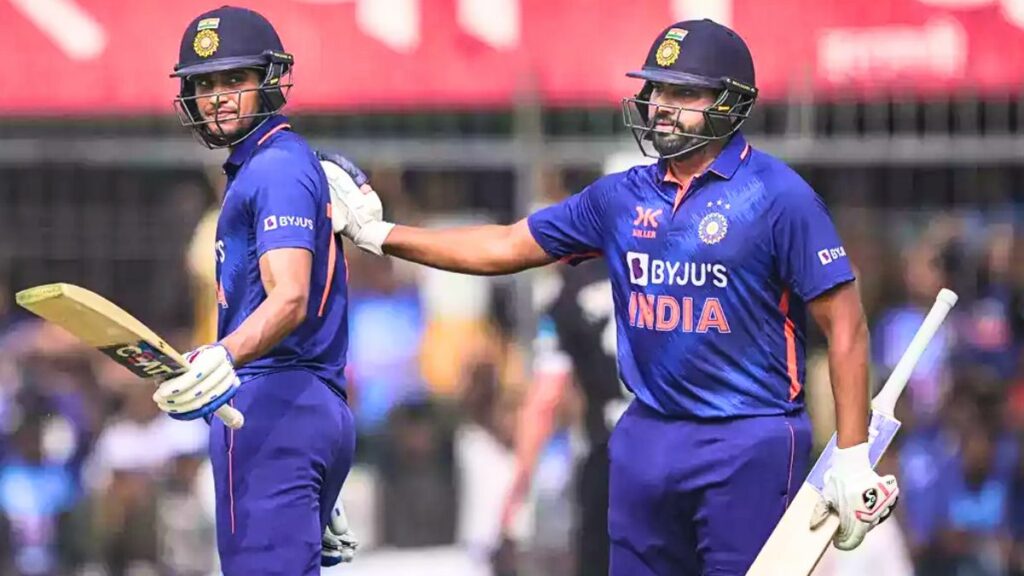
In the context of the WTC Final between India and Australia, it is important to consider the impact of the IPL mindset on the batting performance of Rohit Sharma and Shubman Gill. Both players are known for their attacking style of play, which is often associated with the fast-paced nature of the Indian Premier League (IPL). Among the Indian batsmen, in WTC finals Rohit Sharma contributed 15 runs while Shubman Gill scored 13 runs in India’s first innings.
Also Read: ‘I Have No Shame..’ Virat Kohli Opens Up on His Mistake
The IPL is a tournament known for its high-intensity cricket, where players are encouraged to play aggressive shots and score quick runs. This format of the game often leads to a different mindset and approach for the players involved. In the IPL, batsmen are expected to score at a brisk pace, taking risks and playing a range of aggressive shots to maximize their team’s total.

However, in a Test match scenario like the WTC Final, the dynamics of the game are completely different. Test cricket demands a more patient and methodical approach from batsmen, as they need to build innings, withstand pressure, and score runs consistently over a longer period of time.
The transition from the IPL to Test cricket can be challenging for players, as they need to adapt their mindset and game plan accordingly. The aggressive instincts and shot selection that are successful in the IPL may not always yield the desired results in a Test match setting.
In the case of Rohit Sharma and Shubman Gill, their IPL mindset might have affected their batting performance in the WTC Final. The urge to play attacking shots and score runs quickly may have led to their dismissals at relatively low scores.
Rohit Sharma, known for his ability to score big runs in limited-overs cricket, might have been tempted to play his natural attacking game from the start. However, in Test cricket, it is crucial to spend time at the crease, assess the conditions, and build an innings. By playing an aggressive shot early on, he might have exposed his wicket and fell for a low score.
Similarly, Shubman Gill, a young and talented batsman, might have carried the IPL mindset into the WTC Final. Instead of focusing on building a solid foundation and playing patiently, he might have been inclined to play aggressive shots to keep the scoreboard moving. This approach can be risky in Test cricket, where patience and discipline are highly valued.
It is important to note that the IPL mindset is not the sole factor responsible for their low scores in the WTC Final. Other factors such as the quality of bowling, the conditions of the pitch, and individual form also play significant roles in determining a batsman’s performance.
The IPL mindset, characterized by an aggressive style of play, might have influenced Rohit Sharma and Shubman Gill’s batting performance in the WTC Final. Their inclination towards attacking shots and quick runs could have resulted in their dismissals at relatively low scores. However, it is crucial to consider various factors when analyzing a batsman’s performance, as Test cricket demands a different approach than the IPL.