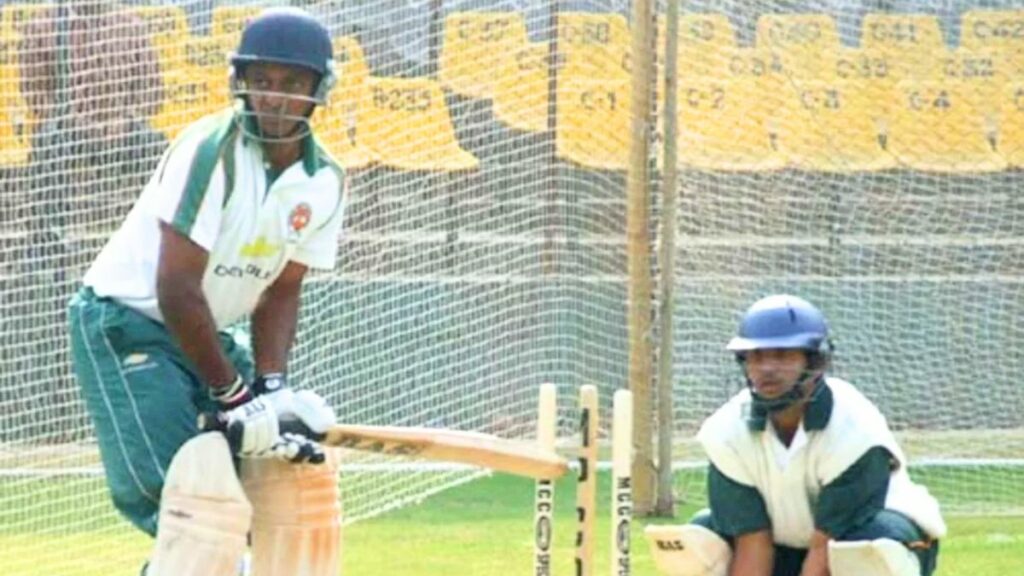
Former cricketer Connor Williams, hailing from Baroda, commemorated his 50th birthday on Monday, August 7th. Having initially stepped onto the first-class cricket scene in the 1995-96 season, Williams was known for his adeptness as a left-handed batter.
Earning a distinguished reputation within Indian domestic cricket, Williams participated in a total of 124 first-class matches, engaging in 208 innings where he accumulated an impressive tally of 7942 runs, maintaining an average of 39.90. Notably, his performance encompassed 19 centuries and 42 half-centuries, with a remarkable highest score of 237 not out. His illustrious domestic career spanned until January 2011, reflecting his enduring dedication to the sport.
In addition to his exploits in the first-class format, Williams made his presence felt in 57 List-A matches. During these encounters, he amassed a notable total of 2087 runs, sustaining an average of 39.37. Among his achievements were three centuries and 14 half-centuries. His List-A journey culminated in a memorable match in February 2007, where he represented Baroda against Mumbai in the Ranji One-Day Trophy fixture.
https://www.youtube.com/watch?v=0pGqnDJAsIM&pp=ygUXY29ubm9yIHdpbGxpYW1zIGNyaWNrZXQ%3D
“The Unprecedented: Connor Williams’ Test Debut That Never Registered”
Many cricketers gain fame through remarkable performances, while some become headlines for not fulfilling their potential on the grand stage. However, the case of Williams is both distinct and peculiar.
Williams’ cricket journey took an unusual turn when he participated in a Test match for India. Strangely, this match isn’t documented in his official records since the International Cricket Council (ICC) deemed it unofficial.
In a promising turn of events, Williams’ impressive displays in domestic batting during the 2000-01 season earned him recognition. His bat yielded 728 runs across eight matches, maintaining an average of 52, including both a century and fifties.
Further raising eyebrows, Williams demonstrated his prowess with scores of 143 and 83 while captaining Baroda in the 2001 Irani Trophy. Despite the Rest of India securing victory by six wickets, Williams’ performance secured him a spot in the Indian team for the 2001 Test tour of South Africa.
His Test debut arrived during the third match of the series at SuperSport Park in Centurion, but under highly controversial circumstances. The second Test at St. George’s Park in Port Elizabeth saw match referee Mike Denness penalize six Indian players for various offenses. The aftermath saw Virender Sehwag banned for a Test due to excessive appealing, Sachin Tendulkar facing a suspended ban over ball-tampering allegations, and other players, including Sourav Ganguly, Harbhajan Singh, Shiv Sunder Das, and Deep Dasgupta, handed suspended bans.
This led to a massive uproar, with India threatening to abandon the South Africa tour unless Denness was replaced as the match referee for the third Test. The ICC upheld Denness’ position, but the South African board, perhaps reluctantly, acceded to the Board of Control for Cricket in India (BCCI) and replaced Denness with Denis Lindsay for the series’ final Test.
While Sehwag’s ban opened the door for Williams to make his debut, this match was rendered unofficial by the ICC due to the South African cricket board’s decision to replace Denness as the match referee for the concluding Test. As a result, Williams’ unique and controversial journey to Test cricket remains an intriguing footnote in the sport’s history.
What was Connor Williams’ performance like in the uncounted Test match?
Winning the toss, South Africa elected to field as India took to batting first. Williams, in the opening slot, encountered a setback during the initial innings, falling for a mere 5 runs off 46 deliveries, dismissed lbw by pacer Lance Klusener. India’s batting display proved lackluster, resulting in a total of 232 runs for the loss of all wickets in 97.4 overs. Shiv Sunder Das led the scoring with 46 runs.
Responding strongly, the Proteas declared at 566/8 in their first innings, powered by centuries from Jacques Kallis (110) and Shaun Pollock (113), along with a contribution of 90 runs from Gary Kirsten. In the second innings for India, which concluded at 261 all out in 84.1 overs, Williams showcased improved form by crafting a score of 42 from 83 balls, featuring seven boundaries. However, his innings was curtailed once again by Klusener.
While Das once more led the run tally with 48, and Sachin Tendulkar posted 40, these efforts proved insufficient to prevent India from succumbing to an innings and 73-run defeat. Regrettably, this marked the end of Williams’ Test cricket journey for India, making it clear that he never received another opportunity to officially represent his nation in this format.
Reflecting on these events, Shashi Tharoor, in a column for ESPNcricinfo penned in 2011, fittingly labeled Williams as an “all-time Mr. Unlucky.” This succinctly captures the essence of the cricketer’s fleeting engagement with international cricket, an episode that remains absent from the annals of record-keeping.
Related posts: