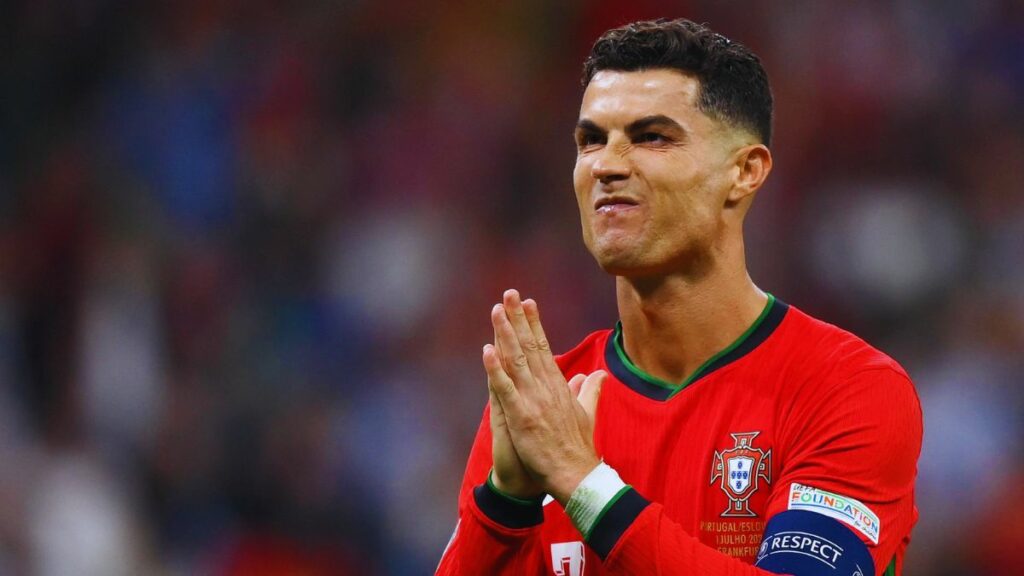
For more than two decades, Cristiano Ronaldo has operated on a simple, ruthless principle, silence the critics with goals. It has worked with breathtaking consistency. From the rainy nights of Manchester to the galáctico grandeur of Madrid, from the Serie A trenches of Turin to the desert lights of Riyadh, and throughout an extraordinary 20-year international career with Portugal, Ronaldo has always found a way to make the doubters look foolish.
But standing on the pitch at the 2026 FIFA World Cup at 41 years of age, after a frustrating 1-1 draw against DR Congo in Portugal’s opening group match, Ronaldo faces a question that no number of records, trophies, or individual accolades can entirely deflect. For the first time in his storied career, the debate isn’t just whether he can deliver. It’s whether Portugal, as a collective, as a team capable of winning football’s biggest prize, are better off evolving beyond him.
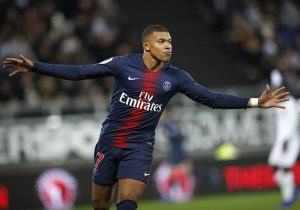
The timing is brutal. Less than 24 hours before Portugal’s draw, Lionel Messi, Kylian Mbappé, and Erling Haaland had all delivered multiple goals in convincing victories for their respective nations. The contrast was impossible to ignore. While those three lit up their opening fixtures, Ronaldo completed the full 90 minutes against DR Congo without registering a single chance created, without a shot on target, and with a mere 25 touches, the second-fewest he has ever recorded in a World Cup start.
The world was watching. And what it saw raised uncomfortable questions.
Portugal vs DR Congo, When the Numbers Lied
On paper, Portugal were the dominant team against DR Congo. Roberto Martínez’s side controlled possession, dictated tempo, and in the six-minute passage leading up to João Neves’ opening goal, completed 84 passes compared to just 12 by their opponents. For a brief window, it looked like a routine tournament opener for one of the title favourites.
Then DR Congo settled. Then Yoane Wissa equalised before half-time. And by the final whistle, the statistics painted a deeply uncomfortable picture.
Portugal vs DR Congo, Match Statistics
| Metric | Portugal | DR Congo |
| Total Shots | 7 | 8 |
| Shots on Target | 1 | 2 |
| Expected Goals (xG) | 0.64 | 0.82 |
| Possession | ~65% | ~35% |
| Passes in 6-min pre-goal sequence | 84 | 12 |
| Result | 1–1 Draw | 1–1 Draw |
A team ranked among the World Cup favourites, outshot and out-expected-goaled by a DR Congo side that had barely touched the ball in the opening quarter of an hour. More than just a shock result, this was a structural failure, and the uncomfortable truth is that Ronaldo’s role within Portugal’s system was at the heart of it.
Ronaldo’s Personal Numbers, A Record That Tells a Story
Ronaldo vs DR Congo, Individual Stats
| Metric | Figure |
| Minutes Played | 90 |
| Touches | 25 (2nd fewest in World Cup starts) |
| Shot Attempts | 3 |
| Shots on Target | 0 |
| Chances Created | 0 |
| Progressive Carries | 2 |
| Progressive Passes | 2 |
| Aerial Duels Won | 2 |
| Ground Duels Attempted | 0 |
| Ball Recoveries | 1 |
| Defensive Contributions | Virtually none |
| First Shot Attempt (minute) | 68′ |
It was, by any fair measure, one of the least influential World Cup performances of Ronaldo’s career. Twenty-five touches across 90 minutes, roughly one meaningful contact every 3.6 minutes. No chances created for teammates. A first shot attempt not arriving until the 68th minute, more than an hour into the match.
But the individual numbers only tell part of the story. More revealing was what happened to Portugal’s attacking shape around him.
The Thierry Henry Moment, Leadership vs Legacy
When Thierry Henry, a man who understands the geometry of a penalty area better than almost anyone, dissects your movement and publicly questions it, you know the debate has moved beyond social media noise.
Speaking after Portugal’s draw, the former Arsenal and France legend broke down a specific sequence involving João Cancelo, Bruno Fernandes, and Ronaldo. Henry’s analysis was clinical and direct.
“One thing that’s important, people, please at home: the team needs to score, not you need to score,”Henry said, setting the scene before drilling into the moment.
According to Henry, a run from Ronaldo into the six-yard box at a critical moment would have dragged defenders deeper and created a tap-in opportunity for Bruno Fernandes. Instead, Ronaldo moved into the path of the back pass, occupying the exact space Fernandes needed, driven, Henry implied, by a desire to be the one who scores rather than the one who creates.
“If he goes into that six-yard box, you would have had to follow him, and then he would have been a tap-in for Bruno Fernandes. But because he wants to score, he goes into the path of the back pass. You see both players, and it’s easier for you to defend.”
This is not simply a criticism of one moment in one match. It is a pattern. Throughout the DR Congo game, Ronaldo repeatedly drifted into wide areas, away from the central zones where a striker of his type should be most dangerous, searching for involvement because he could no longer consistently gain physical advantages against younger, quicker defenders.
The consequence was devastating for Portugal’s fluidity. When crosses came into the box, there was no natural target. When Fernandes, Bernardo Silva, or João Neves made runs, they were frequently into spaces Ronaldo had already vacated or, worse, occupied.
Portugal’s attack, far too often, was being designed around Ronaldo’s needs rather than built on what would hurt the opposition most.
The Drought That Won’t End
Ronaldo’s Major Tournament Goal Drought
| Tournament | Goals | Minutes Played | Last Open-Play Goal |
| World Cup 2022 | 1 (pen) vs Ghana | Full tournament | — |
| Euro 2024 | 0 | 5 appearances | — |
| World Cup 2026 (so far) | 0 | 90 vs DR Congo | — |
| Drought Total | 0 in 10 consecutive matches | 800+ minutes | ~5 years ago |
Since converting a penalty against Ghana at the 2022 World Cup, Ronaldo has gone ten consecutive matches across World Cups and European Championships without scoring. The drought has stretched past 800 minutes. His last open-play goal in either of these competitions came nearly five years ago.
What makes this figure so striking is the context around it. Ronaldo scored in both the semi-final and final as Portugal lifted the UEFA Nations League last summer. He continues to score with routine regularity in Saudi Pro League matches and in qualifying fixtures. The goals have not dried up. But at football’s absolute highest level, the World Cup and European Championship, they have. And that, for a player who has always defined himself by performing on the grandest stages, is the most damning statistic of all.
The Numbers Don’t Lie, Portugal With vs Without Ronaldo
Portugal Attack: Ronaldo On vs Off
| Scenario | Goals per Game (last 2 years, all competitions) |
| When Ronaldo Starts | 1.9 |
| When Ronaldo Does Not Start | 2.8 |
| Last 4 major tournament matches (Ronaldo 396/420 mins) | 1 goal total |
These are not numbers that can be easily waved away with the argument that correlation isn’t causation. Across the last four major tournament matches, Portugal have scored just once despite Ronaldo being on the pitch for 396 of a possible 420 minutes. Over a two-year period across all competitions, the team scores nearly a goal per game more when Ronaldo does not start.
The numbers are not the final word. But they are impossible to dismiss.
The Counterargument, When Ronaldo Scores, Portugal Win
Portugal’s Major Tournament Record: Ronaldo Goals vs No Goals (Since 2006)
| Scenario | Wins | Draws | Defeats |
| Ronaldo Scores | 5 | 1 | 0 |
| Ronaldo Does Not Score | 5 | 5 | 7 |
This is the statistic his supporters rightly cling to, and it is genuinely compelling. When Ronaldo finds the net in major tournaments, Portugal are essentially unbeatable. Six appearances, five wins, one draw, zero defeats. The direct correlation between his goals and Portugal’s results over nearly two decades is one of the most remarkable in international football history.
The problem, of course, is that he has not scored in ten consecutive major tournament matches. At some point, a team cannot keep betting on a trigger that hasn’t been pulled in 800+ minutes.
Martínez’s Impossible Balancing Act
Roberto Martínez has been one of Ronaldo’s most consistent defenders in recent years, and with some justification. He guided Portugal to the Nations League title. He has assembled a squad rich with elite talent, Bruno Fernandes, Bernardo Silva, Vitinha, João Neves, Nuno Mendes, Pedro Neto. The system works. When Ronaldo scores, it works even better.
But the DR Congo match revealed the extent to which Martínez is reluctant to manage Ronaldo’s role carefully. Creative players like Bernardo Silva, Pedro Neto, Nuno Mendes, and Vitinha were all substituted. Ronaldo stayed on for the full 90. Even when Gonçalo Ramos, the most natural alternative striker in Portugal’s squad, was introduced late in the second half, it was a midfielder who made way, not the captain.
That decision speaks to the psychological complexity that no tactical diagram can fully resolve. Few managers in football history have willingly benched one of the greatest players the sport has ever produced. In a tournament environment, where dressing room unity can define a campaign, the cost of dropping Ronaldo is not merely tactical, it is cultural, emotional, and enormously high-profile.
Yet the alternative, continuing to build Portugal’s attack around a player who, by the statistics, is actively reducing their scoring output at major tournaments, carries its own enormous risk.
The Road Ahead, Uzbekistan and Beyond
Portugal’s next assignment against Uzbekistan now carries the weight of a defining moment. A dominant performance, a Ronaldo goal, and the conversation resets, or at least goes quiet for a few days, as it has so many times before. Ronaldo has built a 20-year career on moments exactly like this one.
But another ineffective, peripheral display, another 90 minutes of 25 touches, no chances created, and an attack that bends itself out of shape trying to involve him, will make Martínez’s decisions not just questionable but indefensible.
The most honest version of what Portugal could be in 2026 might involve Ronaldo as a lethal, carefully managed impact substitute, the player who comes on at 60 minutes against tiring defenders, feeds on the spaces created by the running and creativity of Neves, Fernandes, and Bernardo Silva, and delivers the decisive moments that define knockout football.
Whether Ronaldo, a man who has defined himself by being the main character in every story he has ever been part of, would accept that role is an entirely different question.
From Germany 2006 to USA 2026
Cristiano Ronaldo made his first World Cup appearance in Germany in 2006 as a 21-year-old, full of pace, arrogance, and untapped potential. Twenty years later, he walks out for his sixth World Cup as the most capped international men’s footballer in history, the all-time leading international scorer, and one of the two or three greatest players the sport has ever produced.
Nothing about what he has achieved can be taken away. Nothing about his legacy is in doubt.
But legacies are written in the past. World Cups are played in the present. And in the present tense of the 2026 FIFA World Cup, Portugal face a question that their captain’s extraordinary history cannot answer for them.
For years, the debate was whether Portugal could win because of Cristiano Ronaldo.
In 2026, the far more uncomfortable question has arrived, whether Portugal can afford not to evolve beyond him.
Related posts: