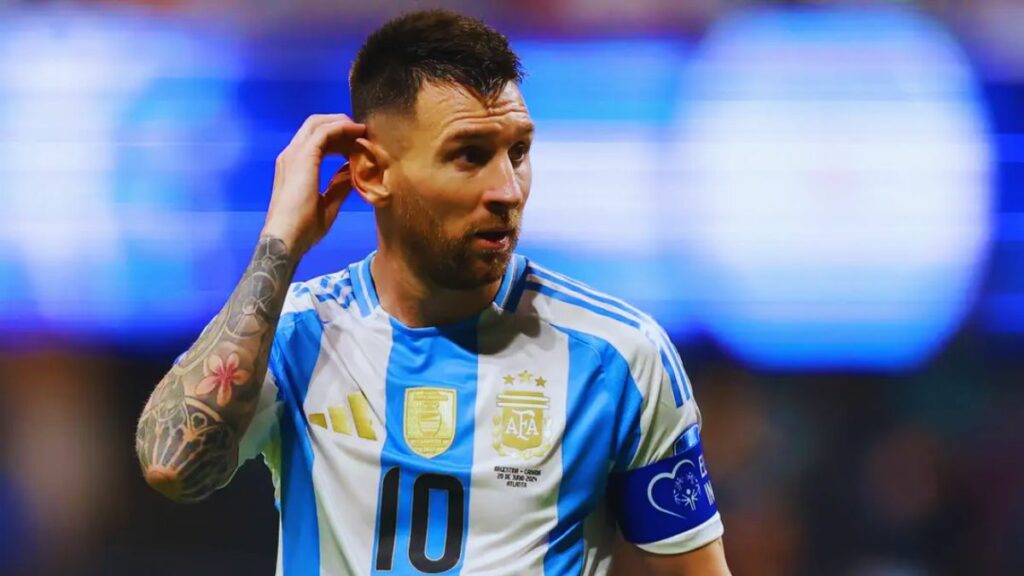
How Luis de la Fuente Can Spoil Lionel Messi and Argentina’s FIFA World Cup 2026 Party
The FIFA World Cup 2026 Final is more than just a contest between Argentina and Spain—it is a fascinating tactical battle between two masterminds on the sidelines. While much of the attention has focused on Lionel Messi and teenage sensation Lamine Yamal, Spain head coach Luis de la Fuente could ultimately be the man who decides the outcome of the biggest match in world football.
Since taking charge of Spain, De la Fuente has transformed La Roja into one of the most disciplined, balanced and tactically intelligent teams in international football. His side won UEFA Euro 2024 by defeating England in the final and have continued that momentum into the FIFA World Cup 2026, where they have displayed consistency, defensive resilience and tactical flexibility.


If Spain are to deny Lionel Messi a second consecutive FIFA World Cup title, it will likely be because De la Fuente wins the battle from the dugout.
A Team Built Around Collective Football
Unlike Argentina, whose biggest strength is often the influence of Lionel Messi, Spain rely on a collective system where every player understands his role.
De la Fuente has revived Spain’s traditional possession-based philosophy but has added greater verticality and attacking intent. Instead of dominating possession for its own sake, Spain now move the ball with greater purpose, creating overloads on the wings and attacking spaces behind opposition defences.
This tactical evolution has made Spain one of the most complete teams in the tournament.
Against an Argentina side that thrives on transitional attacks, maintaining possession could become Spain’s greatest defensive weapon.
Controlling Lionel Messi
Stopping Lionel Messi entirely is almost impossible.
However, Luis de la Fuente does not need to eliminate Messi from the game—he simply needs to reduce his influence.
Spain are expected to deny Messi space between the midfield and defensive lines by maintaining compact defensive distances. Rather than assigning one player to mark Messi throughout the match, Spain could use a zonal defensive approach where multiple midfielders and defenders close passing lanes whenever Messi receives possession.
This method minimizes the risk of creating gaps elsewhere on the pitch.
Spain’s midfield, known for its technical quality and tactical awareness, will play a crucial role in ensuring Messi spends more time chasing the ball than creating chances.
Winning the Midfield Battle
World Cup finals are often decided in midfield.
Spain possess one of the strongest midfield units in international football, capable of controlling tempo, recycling possession and dictating the rhythm of matches.
If Spain dominate possession for long periods, Argentina may struggle to involve Messi in dangerous attacking positions.
The longer Spain keep the ball, the less frequently Argentina can launch their trademark counter-attacks.
For De la Fuente, controlling the midfield is not simply about creating chances—it is also about limiting Argentina’s opportunities.
The Lamine Yamal Factor
Much of Spain’s attacking threat revolves around Lamine Yamal.
Despite his young age, Yamal has demonstrated remarkable maturity throughout the tournament. His dribbling, creativity and decision-making consistently stretch opposition defences.
Argentina’s full-backs could face one of their toughest challenges if Yamal isolates defenders in one-on-one situations.
If Spain can successfully create space for Yamal through quick passing combinations and overlapping runs, they could force Argentina’s defence into uncomfortable positions.
One moment of brilliance from Yamal could change the course of the final.
Tactical Flexibility
One of Luis de la Fuente’s greatest strengths is adaptability.
Spain have shown throughout the tournament that they can alter formations and tactical approaches depending on the opponent.
Whether defending deep, pressing aggressively or controlling possession, Spain have demonstrated the ability to adjust without losing their identity.
This flexibility could become decisive if Argentina take an early lead or if the match extends into extra time.
Rather than relying on a single game plan, Spain have multiple tactical solutions available.
Defensive Discipline Wins Finals
History has repeatedly shown that strong defensive organization often proves decisive in major finals.
Spain have been among the tournament’s best defensive teams, conceding very few goals while limiting opponents to low-quality scoring opportunities.
Instead of engaging Argentina in an open, end-to-end contest, De la Fuente is likely to prioritize defensive compactness before gradually increasing attacking pressure.
This measured approach could frustrate Argentina and reduce Messi’s opportunities to influence the game.
Winning the Psychological Battle
Managing emotions is just as important as managing tactics.
World Cup finals generate enormous pressure, and experienced coaches understand the importance of keeping players calm during difficult moments.
Luis de la Fuente has consistently created a united dressing room where every player understands the collective objective.
Spain’s confidence has grown with every victory, and their unbeaten run has reinforced belief within the squad.
If the match remains level entering the closing stages, Spain’s composure could become one of their biggest advantages.
Set Pieces Could Be the Difference
While open play often dominates headlines, World Cup finals are frequently decided by set pieces.
Spain have worked extensively on attacking and defensive dead-ball situations under De la Fuente.
Corners, indirect free-kicks and throw-ins could provide the breakthrough in an otherwise tightly contested encounter.
Argentina have traditionally been dangerous from set pieces, making Spain’s preparation in these situations even more significant.
One well-executed corner or free-kick routine may decide the destination of football’s biggest prize.
Can Spain Handle the Pressure?
Playing against Lionel Messi in what could be one of the final World Cup matches of his career brings enormous emotional pressure.
The majority of neutral supporters may hope to witness another fairytale ending for the Argentine legend.
However, Luis de la Fuente’s responsibility is not to fulfil football’s romantic narrative—it is to deliver victory for Spain.
His players have repeatedly shown they can perform under immense expectations, including their UEFA Euro 2024 triumph.
If they maintain their tactical discipline and composure, Spain possess every quality required to upset the defending champions.
Final Thoughts
Football finals are rarely won by individuals alone.
They are won by teams that remain tactically disciplined, mentally resilient and capable of executing a clear game plan.
Lionel Messi’s genius can decide any match, but Luis de la Fuente has built a Spanish side specifically designed to neutralize elite opponents through teamwork, possession, tactical intelligence and defensive organization.
Should Spain lift the FIFA World Cup 2026 trophy, the headlines may celebrate Lamine Yamal’s brilliance or another historic achievement for Spanish football.
Behind that success, however, will stand the quiet influence of Luis de la Fuente—a coach whose tactical planning, adaptability and leadership could spoil Lionel Messi and Argentina’s dream of back-to-back World Cup titles.
In football, legends write history on the pitch, but great coaches often shape it from the touchline. If Spain emerge victorious, Luis de la Fuente may well be remembered as the mastermind who denied one of football’s greatest fairytale endings.
| Section | Key Insights |
|---|---|
| Headline | How Luis de la Fuente Can Spoil Lionel Messi and Argentina’s FIFA World Cup 2026 Party |
| Introduction | The FIFA World Cup 2026 Final between Argentina and Spain is not only a battle between players but also a tactical duel between two coaching philosophies. While Lionel Messi and Lamine Yamal dominate the headlines, Spain head coach Luis de la Fuente could be the key figure who determines the outcome of football’s biggest match. |
| Luis de la Fuente’s Transformation of Spain | Since taking charge of Spain, Luis de la Fuente has transformed La Roja into one of the world’s most tactically disciplined and balanced teams. After guiding Spain to the UEFA Euro 2024 title, he has carried that momentum into the FIFA World Cup 2026 through tactical flexibility, defensive resilience, and collective football. |
| A Team Built Around Collective Football | Unlike Argentina, who often rely on Lionel Messi’s brilliance, Spain thrive as a collective unit where every player contributes to the system. De la Fuente has modernized Spain’s possession-based philosophy by adding quicker transitions, vertical passing, and intelligent wing play, making Spain a more dynamic attacking side. |
| Controlling Lionel Messi | Completely stopping Lionel Messi may be impossible, but Spain’s objective will be to reduce his influence. Rather than assigning one player to man-mark him, Spain are expected to use a compact zonal defensive structure, closing passing lanes and limiting Messi’s space between midfield and defence. Their midfield will be crucial in forcing Messi away from dangerous areas. |
| Winning the Midfield Battle | Spain possess one of the strongest midfield units in international football. By dominating possession, controlling the game’s tempo, and recycling the ball effectively, they can reduce Argentina’s opportunities to launch counter-attacks while limiting Messi’s involvement in attacking transitions. |
| The Lamine Yamal Factor | Lamine Yamal has emerged as Spain’s biggest attacking weapon. His pace, dribbling ability, creativity, and maturity allow Spain to stretch opposition defences. If Spain isolate Yamal against Argentina’s full-backs through overlapping runs and quick combinations, one moment of brilliance could decide the final. |
| Tactical Flexibility | One of Luis de la Fuente’s greatest strengths is his adaptability. Spain have shown throughout the tournament that they can adjust formations, pressing intensity, and tactical approaches depending on the opposition. This flexibility provides multiple solutions if Argentina score first or if the match extends into extra time. |
| Defensive Discipline Wins Finals | Spain have built one of the tournament’s strongest defensive records by remaining compact and organized. Instead of engaging Argentina in an open game, De la Fuente is likely to focus on defensive stability before gradually increasing attacking pressure, frustrating Argentina and reducing Messi’s impact. |
| Winning the Psychological Battle | World Cup finals demand mental strength as much as tactical intelligence. Luis de la Fuente has created a united dressing room built on confidence, discipline, and collective belief. If the final remains close in the latter stages, Spain’s composure and emotional control could become decisive. |
| Set Pieces Could Decide the Match | Spain have invested significant preparation into attacking and defending set pieces. Corners, indirect free-kicks, and throw-ins could become decisive moments in a tightly contested final. With Argentina also dangerous from dead-ball situations, winning these small battles may determine the World Cup champions. |
| Can Spain Handle the Pressure? | Facing Lionel Messi in what could be one of his final World Cup appearances brings immense emotional pressure. However, Luis de la Fuente’s responsibility is to deliver victory, not to complete a fairytale ending. Spain’s experience in winning major tournaments, including UEFA Euro 2024, gives them confidence they can handle the occasion. |
| Final Thoughts | Football finals are won through teamwork, tactical discipline, and mental resilience rather than individual brilliance alone. Luis de la Fuente has built a Spain side capable of neutralizing elite opponents through possession, organization, and adaptability. If Spain lift the FIFA World Cup 2026 trophy, the headlines may celebrate Lamine Yamal, but much of the credit will belong to Luis de la Fuente—the tactical mastermind who could deny Lionel Messi and Argentina another World Cup triumph. |
Related posts: