The FIFA World Cup is the biggest prize in men’s international football, and since 1930 it has produced 22 champions and many famous finals. The men’s FIFA World Cup started in 1930 and is played every four years, except in 1942 and 1946 when it was cancelled because of World War II.
Only eight countries have ever lifted the trophy: Brazil, Germany, Italy, Argentina, France, Uruguay, England and Spain.
Brazil is the most successful team with five World Cup titles (1958, 1962, 1970, 1994, 2002). Germany and Italy follow with four titles each, while Argentina have three, France and Uruguay have two, and England and Spain have one each.
Full table of FIFA World Cup finals (1930–2022)
The table below lists every men’s FIFA World Cup final from 1930 to 2022, including the year, winner, runner-up and the goals scored by each team in normal time plus extra time (penalty shoot-outs are not counted in the goal columns).
| Year | Winner | Runner-up | Winner goals | Runner-up goals |
| 1930 | Uruguay | Argentina | 4 | 2 |
| 1934 | Italy | Czechoslovakia | 2 | 1 |
| 1938 | Italy | Hungary | 4 | 2 |
| 1950 | Uruguay | Brazil | 2 | 1 |
| 1954 | West Germany | Hungary | 3 | 2 |
| 1958 | Brazil | Sweden | 5 | 2 |
| 1962 | Brazil | Czechoslovakia | 3 | 1 |
| 1966 | England | West Germany | 4 | 2 |
| 1970 | Brazil | Italy | 4 | 1 |
| 1974 | West Germany | Netherlands | 2 | 1 |
| 1978 | Argentina | Netherlands | 3 | 1 |
| 1982 | Italy | West Germany | 3 | 1 |
| 1986 | Argentina | West Germany | 3 | 2 |
| 1990 | West Germany | Argentina | 1 | 0 |
| 1994 | Brazil | Italy | 0 | 0 |
| 1998 | France | Brazil | 3 | 0 |
| 2002 | Brazil | Germany | 2 | 0 |
| 2006 | Italy | France | 1 | 1 |
| 2010 | Spain | Netherlands | 1 | 0 |
| 2014 | Germany | Argentina | 1 | 0 |
| 2018 | France | Croatia | 4 | 2 |
| 2022 | Argentina | France | 3 | 3 |
All scorelines are taken from the official record of FIFA World Cup finals.
For years where the final went to penalties (1994, 2006, 2022), the goals here show the score after extra time; penalties only decided the winner, not the goals in this table.
Early years: Uruguay and Italy set the tone (1930–1938)
The first World Cup took place in Uruguay in 1930, and the hosts became the first champions by beating Argentina 4–2 in Montevideo.
This win gave Uruguay their first World Cup title and set up a strong early rivalry with Argentina.
In 1934, Italy hosted and won the World Cup, beating Czechoslovakia 2–1 after extra time in Rome.
Four years later, in 1938, Italy defended their crown with a 4–2 win over Hungary, making them the first team to win back‑to‑back World Cups.
There were no tournaments in 1942 and 1946 because of World War II, so the next World Cup came only in 1950.
The famous Maracanã upset and the rise of Germany and Brazil (1950–1962)
The 1950 World Cup in Brazil ended with one of the most famous matches in football history, when Uruguay beat Brazil 2–1 at the Maracanã in Rio in the decisive group game, which is treated as the final.
This gave Uruguay their second World Cup title and stunned a record home crowd.
In 1954, West Germany came from behind to beat the great Hungary side 3–2 in Bern, a match often called the “Miracle of Bern”.
This win gave West Germany their first World Cup and marked the start of their long record in finals.
Brazil then took over the stage, winning the 1958 World Cup in Sweden by beating the hosts 5–2 in the final, with 17‑year‑old Pelé becoming a global star.
They defended their title in 1962, beating Czechoslovakia 3–1 in Chile and becoming only the second team to win two World Cups in a row after Italy.
England’s only title and Brazil’s third crown (1966–1970)
In 1966, England hosted the World Cup and won their first and so far only title by beating West Germany 4–2 after extra time at Wembley.
This match is remembered for Geoff Hurst’s hat‑trick and a controversial goal that bounced down off the crossbar.
Four years later, in 1970 in Mexico, Brazil produced one of the most loved World Cup teams of all time and beat Italy 4–1 in the final.
This victory gave Brazil their third World Cup and allowed them to keep the Jules Rimet Trophy permanently.
Argentina’s home glory and Italy’s strong run (1974–1982)
The 1974 World Cup saw West Germany win their second title with a 2–1 win over the Netherlands in Munich, after going behind to a penalty in the opening minutes.
The Netherlands, led by Johan Cruyff, were known for “Total Football” but still fell short in the final.
In 1978, Argentina hosted the tournament and beat the Netherlands 3–1 after extra time in Buenos Aires to win their first World Cup.
Mario Kempes scored twice in that final and finished as the tournament’s top scorer.
The 1982 World Cup in Spain ended with Italy beating West Germany 3–1 in Madrid.
This gave Italy their third world title and completed a strong run that also included big wins over Brazil and Argentina in the second round.
Maradona’s Argentina and Germany’s revenge (1986–1990)
In 1986, Argentina won their second World Cup by beating West Germany 3–2 in Mexico City.
Diego Maradona was the star of the tournament and played a huge role in leading Argentina to the final, even though he did not score in the final itself.
Four years later, in 1990, West Germany and Argentina met again in the final, this time in Rome.
West Germany won 1–0 with a late penalty, earning their third World Cup and their last major trophy before reunification.
Penalties, then France’s first title and Brazil’s fifth (1994–2002)
The 1994 final in the United States was the first World Cup final to be decided on penalties after a 0–0 draw between Brazil and Italy in Pasadena.
Brazil won the shoot-out 3–2 and claimed their fourth world title.
In 1998, hosts France lifted their first World Cup by beating Brazil 3–0 in Saint‑Denis near Paris.
Zinedine Zidane scored twice from corners in the first half, and Emmanuel Petit added a late third goal.
The 2002 World Cup in Korea and Japan ended with Brazil beating Germany 2–0 in Yokohama.
Ronaldo scored both goals, and this win gave Brazil their fifth World Cup, which is still a record.
Italy, Spain and Germany share the next three (2006–2014)
In 2006, Italy and France drew 1–1 after extra time in Berlin, and Italy won 5–3 on penalties.
This gave Italy their fourth World Cup title and came in a final remembered for Zinédine Zidane’s famous head‑butt red card in his last match.
Spain then won their first World Cup in 2010 in South Africa, beating the Netherlands 1–0 after extra time in Johannesburg with a goal from Andrés Iniesta.
This title completed a great run for Spain, who also won Euro 2008 and Euro 2012.
In 2014, Germany won their fourth World Cup by beating Argentina 1–0 after extra time at the Maracanã in Rio de Janeiro.
Mario Götze scored the winning goal in the 113th minute after coming on as a substitute.
France and Argentina in the modern era (2018–2022)
France claimed their second World Cup in 2018 by defeating Croatia 4–2 in Moscow.
It was a high‑scoring final that included a penalty, an own goal and strong attacking play from both sides.
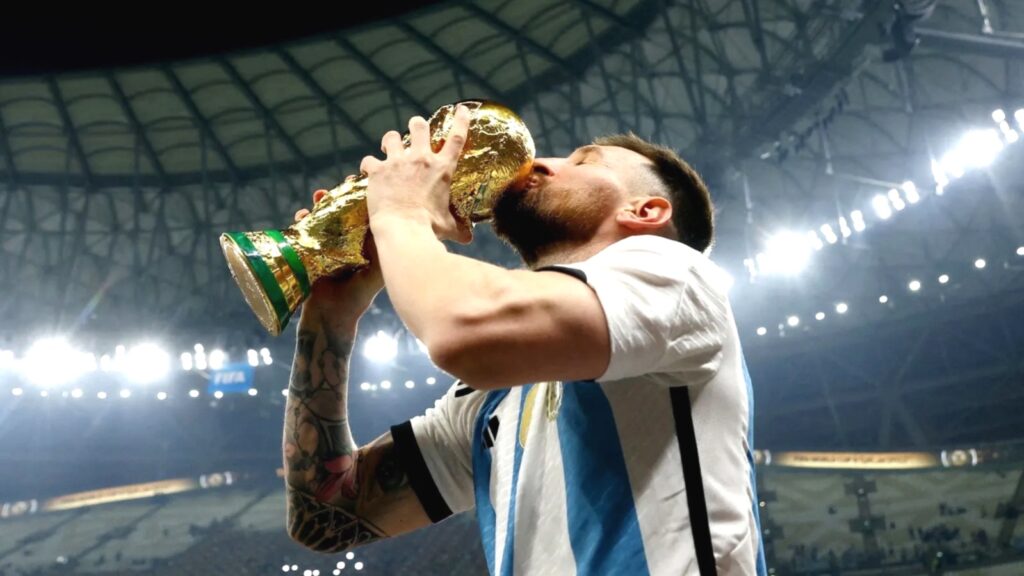
In 2022, Argentina and France played one of the most dramatic finals in World Cup history in Lusail, Qatar.
The match finished 3–3 after extra time, and Argentina then won 4–2 on penalties, securing their third World Cup title.
Now, let us look at how many titles each country has and how often they have reached the final.
| Team | World Cup titles | Times runners-up | Total finals played | Years won |
| Brazil | 5 | 2 | 7 | 1958, 1962, 1970, 1994, 2002 |
| Germany (incl. West Germany) | 4 | 4 | 8 | 1954, 1974, 1990, 2014 |
| Italy | 4 | 2 | 6 | 1934, 1938, 1982, 2006 |
| Argentina | 3 | 3 | 6 | 1978, 1986, 2022 |
| France | 2 | 2 | 4 | 1998, 2018 |
| Uruguay | 2 | 0 | 2 | 1930, 1950 |
| England | 1 | 0 | 1 | 1966 |
| Spain | 1 | 0 | 1 | 2010 |
These numbers show that Brazil “won” a record five World Cup titles, while Germany have reached the most finals with eight appearances.
Argentina’s win in 2022 took them to three titles, level with France and one behind Italy and Germany.
Simple decade-by-decade snapshot of FIFA World Cup winners
To make it even clearer, here is a short breakdown by decade.
- 1930s: Uruguay (1930), Italy (1934, 1938) – Italy finish the decade as two‑time world champions.
- 1950s: Uruguay (1950), West Germany (1954), Brazil (1958) – three different champions.
- 1960s: Brazil (1962), England (1966) – Brazil add a second straight title; England win their first.
- 1970s: Brazil (1970), West Germany (1974), Argentina (1978) – three powers share the decade.
- 1980s: Italy (1982), Argentina (1986) – both finish the decade with three and two titles respectively.
- 1990s: West Germany (1990), Brazil (1994), France (1998) – three different winners again.
- 2000s: Brazil (2002), Italy (2006) – Brazil reach five titles, Italy reach four.
- 2010s: Spain (2010), Germany (2014), France (2018) – Europe dominates this period.
- 2020s so far: Argentina (2022) – they move to three World Cups.
Each decade has seen new champions joining the list, but only eight countries have managed to win at least one World Cup across all these years.
Key trends in World Cup finals
Several clear trends appear when you look across every World Cup final.
First, only European (UEFA) and South American (CONMEBOL) teams have ever reached a World Cup final.
Second, Germany and Brazil have been the most regular visitors to finals, which shows how often they go deep in tournaments even if we only count titles here.
Third, many finals have been very tight, low‑scoring matches, especially from 1990 to 2014, when six straight finals were decided by a one‑goal margin or on penalties with very few goals in normal time.
However, the 2018 and 2022 finals broke that pattern with 4–2 and 3–3 scorelines before penalties in 2022, giving fans very open and attacking games.
Finally, some countries have reached multiple finals without ever winning: the Netherlands have played three finals, while Hungary and Czechoslovakia have each played two, but all of them finished as runners-up every time.
This underlines how hard it is not just to reach a World Cup final, but also to take that last step and lift the trophy.