There is visible excitement around pickleball leagues launching across India.
Franchises are investing aggressively.
Overseas players are flying in.
Influencers are promoting heavily.
Big announcements are making big noise.
On the surface, it looks like the sport is booming.
But here’s the uncomfortable truth: leagues alone do not build sports ecosystems. Systems do.
If India truly wants pickleball to become a long-term sporting movement rather than a short-term entertainment experiment, the foundation must be built from the ground up.
- The Economics: Most Early Franchises Will Struggle:
When leagues launch before a strong participation base exists, the financial model becomes fragile.
A professional league structure demands:
Heavy franchise fees
Player contracts (including overseas talent)
Venue rentals and court infrastructure
Broadcast production costs
Marketing and influencer promotions
Travel and logistics
Now compare that to the current revenue streams available in Indian pickleball:
Limited ticketing revenue
Early-stage sponsorship market
Minimal broadcast monetization
No long-standing fan culture
Without deep grassroots demand, most early franchises are likely to bleed capital.
Visibility does not equal sustainability.
India has seen this before in multiple emerging sports. Initial buzz generates attention, but without a participation pyramid supporting the top tier, the model struggles to survive beyond the novelty phase.

2. History Shows Leagues Are Accelerators — Not Foundations:
Look at the success stories often cited as inspiration: the Indian Premier League and the Pro Kabaddi League.
Both are now commercially strong properties. But neither succeeded overnight.
Before the IPL launched in 2008, India already had:
Decades of street cricket culture
Strong state associations
Ranji Trophy and domestic tournaments
Millions of registered and unregistered players
A deeply emotional fanbase
The IPL became an accelerator for an already powerful ecosystem.
Similarly, kabaddi was embedded in rural India long before the Pro Kabaddi League professionalized it. Schools played it. Villages celebrated it. State tournaments were active. The PKL commercialized something that already had cultural depth.
In both cases, the ecosystem existed first. The league amplified it.
Pickleball in India, however, is still building its participation pyramid. Launching high-cost leagues without completing the base layer risks putting the roof before the foundation.
3. Influencers & Overseas Talent Can’t Replace Structure:
Yes, influencers help visibility.
Yes, foreign players elevate competitive standards.
Yes, celebrity association attracts sponsors.
But attention is not the same as retention.
If the following elements are weak:
Financial sustainability
Player development pathways
Community participation
Grassroots coaching systems
Structured ranking and tournament models
Then hype will fade.
Social media impressions do not convert automatically into lifelong players. Nor do they create talent pipelines.
Sustainable sports ecosystems depend on systems — not star power.
4. Real Growth Comes From Grassroots Infrastructure:
If India genuinely wants pickleball to flourish long-term, the strategic focus must shift toward building a structured system.
Here’s what that means:
School & College Programs
Introducing pickleball in schools creates early adoption. It normalizes the sport. It builds lifelong participants. Inter-school tournaments create emotional investment.
Community Court Development
Accessible courts in residential complexes, clubs, and community centers reduce entry barriers. Convenience drives adoption.
Certified Coaching Pathways
Standardized coaching certifications ensure technical development. Without trained coaches, player quality stagnates.
Structured District & State Tournaments
Clear competitive ladders motivate players. District ➝ State ➝ National pathways create purpose and aspiration.
Talent Progression Models
Every serious sport provides a roadmap:
Grassroots ➝ District ➝ State ➝ National ➝ Professional
This pipeline builds:
Stronger players
Larger fan bases
Sponsor confidence
Media interest
Long-term league sustainability
When thousands of players are competing across states regularly, leagues gain natural depth.
5️⃣ The Participation Pyramid Matters
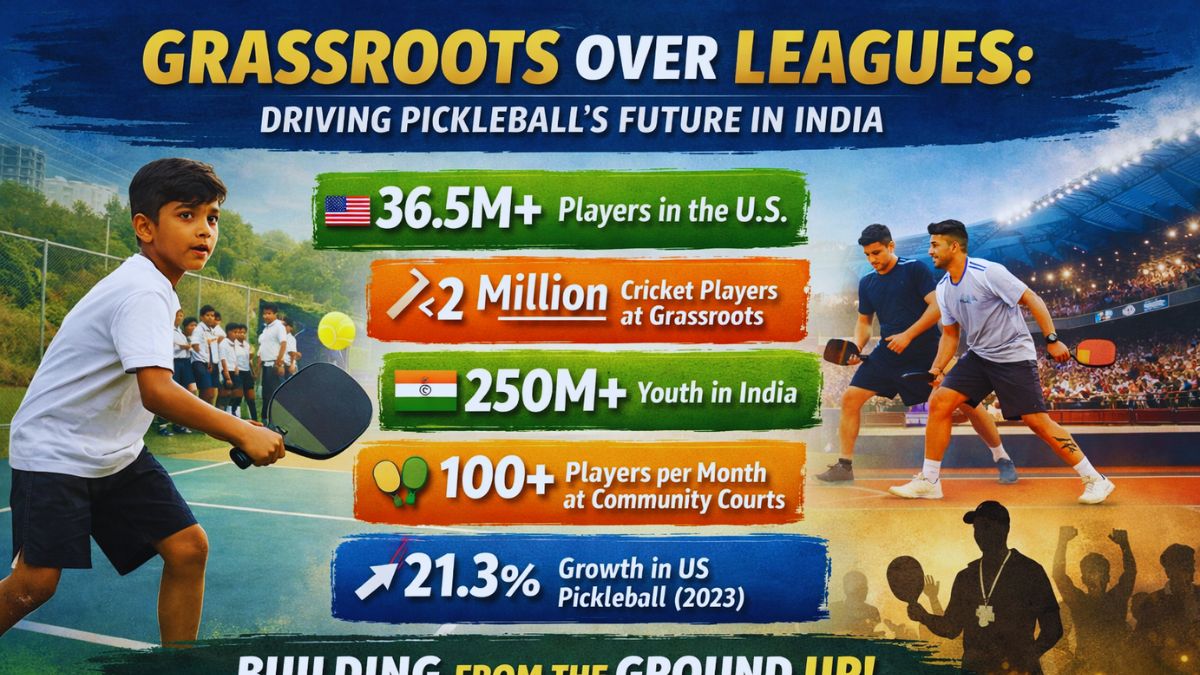
For context, cricket in India has over two million registered players, along with millions more playing informally at the grassroots level.
The IPL thrives because the base is massive.
If street cricket disappeared tomorrow, talent supply would collapse within a generation.
Grassroots ensures:
Constant talent inflow
Community engagement
Emotional investment
Sustainable fan development
A sport grows when participation is wide at the bottom and elite competition is narrow at the top — not the other way around.
Right now, pickleball in India is expanding rapidly in urban pockets. But the participation pyramid is still shallow compared to established sports.
Until that pyramid deepens, leagues will remain vulnerable.
6️⃣ Building Systems Requires Patience
The temptation to launch leagues early is understandable. Investors want visibility. Brands want positioning. Organizers want headlines.
But building a sport is not the same as launching a product.
It requires:
5–10 year planning cycles
Collaboration between associations and private organizers
Transparent governance
Ranking systems
Talent scouting mechanisms
Coach development programs
The countries where pickleball has matured fastest focused heavily on community-driven growth before full-scale commercialization.
India must learn from that.
Final Perspective: Bottom-Up Always Wins
A sport is not built from the top down.
It is built from school grounds.
From local clubs.
From district tournaments.
From weekend community players.
Leagues are powerful accelerators — but only when the ecosystem is ready.
Without systems, leagues become expensive experiments.
With systems, leagues become sustainable institutions.
If pickleball in India truly wants long-term success, the priority should not be how many franchises launch this year.
The real question should be:
How many schools adopted pickleball this year?
How many certified coaches were trained?
How many district tournaments were conducted?
How many new players joined the system?
Because in the end, no sport in India flourishes through leagues alone.
It flourishes through structure.
And structure begins at the grassroots.
🏓 Pickleball in India: Leagues vs Systems — Tabular Breakdown
| Section | Key Points |
|---|---|
| Current Excitement Around Leagues | • Franchises investing aggressively • Overseas players flying in • Influencers promoting heavily • Big announcements creating buzz • On the surface, sport appears to be booming |
| Core Argument | • Leagues alone do not build sports ecosystems • Systems build long-term sustainability • Foundation must be built from the ground up |
| 1️⃣ Economics: Why Early Franchises May Struggle | Cost Structure: • Heavy franchise fees • Player contracts (including overseas talent) • Venue rentals & court infrastructure • Broadcast production costs • Marketing & influencer promotions • Travel & logisticsCurrent Revenue Reality: • Limited ticketing revenue • Early-stage sponsorship market • Minimal broadcast monetization • No long-standing fan culture Conclusion: |
| 2️⃣ Leagues Are Accelerators — Not Foundations | Examples: • Indian Premier League • Pro Kabaddi LeagueWhy They Succeeded: • Decades of existing sports culture • Strong state associations • Structured domestic tournaments • Millions of players • Deep emotional fanbase Insight: |
| 3️⃣ Influencers & Overseas Talent Limitations | • Influencers create visibility • Foreign players elevate competition • Celebrity association attracts sponsorsBut If Weak: • Financial sustainability • Player development pathways • Community participation • Grassroots coaching systems • Structured ranking & tournament models Result: |
| 4️⃣ Real Growth = Grassroots Infrastructure | Focus Areas:
School & College Programs – Early adoption, emotional investment Community Court Development – Accessibility, reduced entry barriers Certified Coaching Pathways – Technical quality & player growth Structured District & State Tournaments – Competitive ladder & aspiration Talent Progression Model: Outcome: |
| 5️⃣ Participation Pyramid Importance | • Cricket has over 2 million registered players + millions informal • The IPL thrives because grassroots base is massiveGrassroots Ensures: • Constant talent inflow • Community engagement • Emotional investment • Sustainable fan development Principle: |
| 6️⃣ Building Systems Requires Patience | • Investors want visibility • Brands want positioning • Organizers want headlinesBut Real Development Needs: • 5–10 year planning • Association–private collaboration • Transparent governance • Ranking systems • Talent scouting mechanisms • Coach development programs Learning: |
| Final Perspective: Bottom-Up Always Wins | • Sport is built from school grounds, clubs, districts, community players • Leagues are accelerators, not foundationsWithout Systems: Expensive experiments With Systems: Sustainable institutions Key Questions: Conclusion: No sport flourishes through leagues alone — it flourishes through structure. |
Related posts: