Sportzcraazy

From Vijay Amritraj to Today: Why Indian Tennis Is Facing Its Biggest Crisis

As Fan of Sports you feel dejected witnessing the current situation of Indian Tennis, especially when someone who has witnessed popular rise back in 60s.

During that era, Indian Single Players including the likes of-  Vijay Amritraj, Ramnathan Krishnan and others have done wonders  back in those era where he finally made in Top 5.

Over the years, things have declined drastically, for Indian Tennis let me explore the same in the below format:

  1.  Broken Development Pipeline: From Grassroot to Pro:

Anyone who plays Tennis or wants to make professional career should be assured that if he plays good he will get an opportunity at the highest level.

Like Majority of sports, Indian Sporting Ecosystem is clearly broken including tennis where there is no pathway to progress from grassroot to highest level.

If we talk about Successful Tennis playing nations their pathways goes around- grassroot identification- sponsored junior development- high performance training- structured transition for Pro Circuit.

In India all these pathway is clearly fragmented let me explain how?
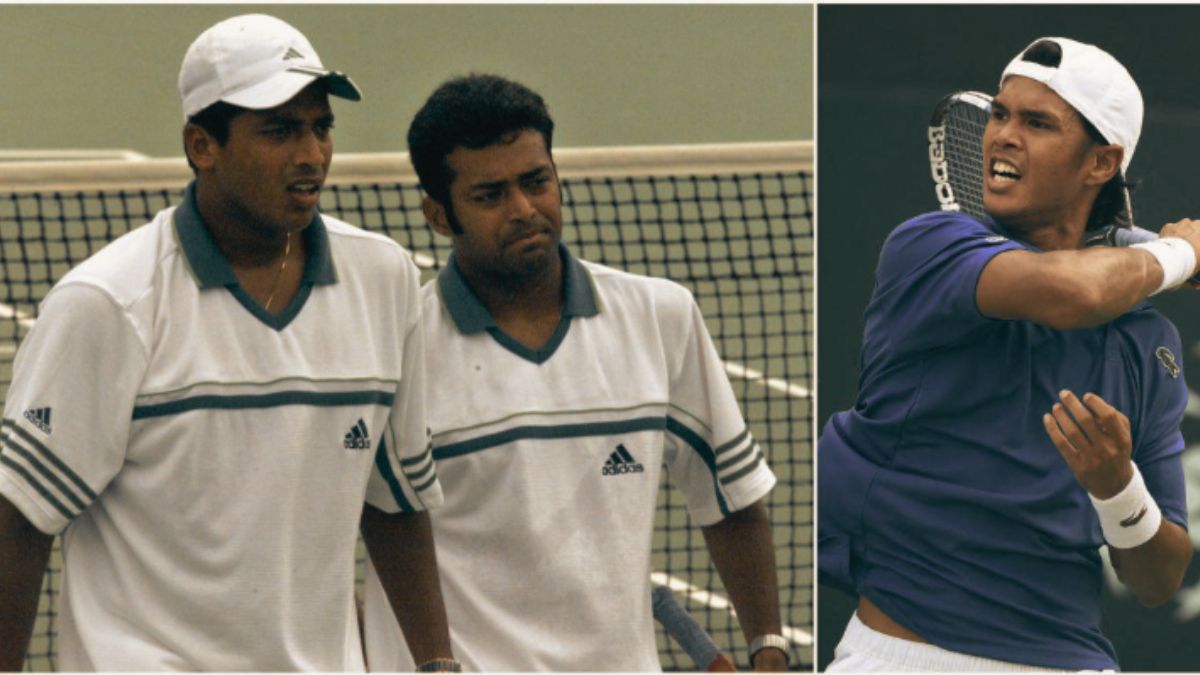


A. In India, talented juniors hit a “dead end” once they outgrow local competition, and must decide whether they want to continue playing in Indian ecosystem or leave India for better opportunities.

B. Players like Sumit Nagal, Ramkumar Ramnathan have clearly moved their bases in Europe for better facility and coaching.

C- Lack of Domestic Ecosystem, forces several player to leave this sport permanently especially the ones coming from lower middle class background who can’t move outside India to pursue their dreams.


2.  Lack of Funds and Financial Support:


If you look at Tennis ecosystem in India, is mostly underfunded or financial support is lacking big time.

Sport like Tennis is pretty expensive- year round travelling, coaching, physios, training, and entry fees all these are expensive.

Look at the Top Stars like Sumit Nagal hardly have any endorsements which clearly reflect how Brands perceive Tennis in our country.

With cricket athlete and sponsorships majorly dominating, all other sports are struggling and even athletes belonging to these sports are also struggling big time.

By Struggling  I mean Monetary struggle which is the biggest challenge for any athlete as most of them come from middle class background for them to sustain it’s not possible.


3. Weak Infrastructure and Coaching Ecosystem in India:

Infrastructure plays an important role in driving any support forward any athlete deserve proper infrastructure to push any sport forward.

Infrastructure include- coaching, tournaments exposure, Kits and Equipment’s and many More.

All these facilities will help any ecosystem to move forward in other words- Infrastructure means supporting services.

There is huge shortage of good coaches, sports scientist, performance staff operating within a coherent national system.

In India Public Tennis Court is extremely missing instead focus is directed towards private clubs which is usually costly that narrows down socio-economic impact.


4. Governance Issues:


Yes you heard it right, All India Tennis Association (AITA) have been criticized a lot, for their policies and selection matters when it comes to Davis Cup.

Several Players in the past have raised concern related to inability of federation to raise standard of this sport to next level.


5. Cultural and Societal Reasons:

This is one of the most important reasons, why Tennis as sport is not growing at high levels in India, where most of the attention would be drawn towards Cricket as the sport draws lot of sponsorships and contribute a lot towards building Indian Sports Ecosystem.

Women’s Sport in India does posses a great talent, but lack of pathways, Cultural and Societal reasons.

There is lot which needs to be done but its already too late as the ecosystem is completely damaged from Top to Bottom.

Reason Key Issue Impact on Indian Tennis
1. Broken Development Pipeline (Grassroots to Pro) India lacks a structured pathway from grassroots to the professional circuit. Unlike leading tennis nations, there is no seamless progression through talent identification, junior development, high-performance training, and professional transition. Talented juniors often reach a dead end after local competitions. Many players, including Sumit Nagal and Ramkumar Ramanathan, have shifted their training bases to Europe for better coaching and competition. Players from middle-class backgrounds frequently quit due to limited opportunities.
2. Lack of Funds & Financial Support Tennis is one of the most expensive sports, requiring year-round spending on coaching, travel, physiotherapists, fitness, equipment, and tournament entry fees. Sponsorship support remains minimal. Financial constraints force many talented players to leave the sport. Even India’s top professionals struggle to secure endorsements, making long-term sustainability difficult.
3. Weak Infrastructure & Coaching Ecosystem India has a shortage of quality public tennis courts, elite coaches, sports scientists, and high-performance support staff. Tennis infrastructure remains concentrated in expensive private clubs. Limited access to quality facilities and coaching reduces the talent pool and prevents players from competing consistently at the international level.
4. Governance Issues The All India Tennis Association (AITA) has faced criticism over selection policies, player management, and long-term development strategies. Several players have publicly questioned the federation’s functioning. Governance concerns have created mistrust within the ecosystem and slowed the overall growth and professionalism of Indian tennis.
5. Cultural & Societal Challenges Cricket dominates public attention, sponsorships, and media coverage, leaving tennis with limited visibility and investment. Women’s tennis also faces additional cultural and structural barriers. Reduced participation, fewer commercial opportunities, and a weak talent pipeline have contributed to the long-term decline of Indian tennis.


Frequently Asked Questions(FAQ) 

Q-1: Why is the Infrastructure and Coaching Ecosystem Weak in Indian Tennis? 

Answer: Infrastructure is one of the biggest pillars behind the success of any sporting nation. Countries that consistently produce Grand Slam champions and top-ranked tennis players have invested for decades in world-class courts, qualified coaches, sports science, and player development programmes. Unfortunately, this is an area where Indian tennis continues to struggle.

When we talk about infrastructure, it is not limited to just building tennis courts. A complete tennis ecosystem includes accessible public courts, certified coaches, strength and conditioning experts, sports psychologists, physiotherapists, nutritionists, video analysts, recovery centres, and a competitive domestic tournament calendar. All these elements work together to help a player reach the highest level. In India, most of these components are either inadequate or available only to a small section of players.

One of the biggest concerns is the shortage of public tennis courts. In many developed tennis nations, children can access community courts at affordable prices through schools, municipalities, or local clubs. In India, however, quality tennis courts are largely concentrated in private clubs, academies, and elite institutions where membership and coaching fees are expensive. This significantly limits participation from middle-class and lower-income families, reducing the overall talent pool.

Another major challenge is the lack of high-quality coaching. Although India has several dedicated coaches, the country still does not have enough internationally certified coaches capable of preparing players for elite-level competition. Coaching standards vary widely across states, and many young players do not receive technical guidance that matches international benchmarks. As a result, players often seek better coaching opportunities abroad once they reach the professional level.

Sports science is another area where Indian tennis lags behind. Modern tennis is no longer just about technique and fitness. Today’s players rely heavily on biomechanics, injury prevention, nutrition planning, mental conditioning, workload management, and performance analytics. These services are standard in leading tennis nations but remain inaccessible or unaffordable for many Indian players. Without proper sports science support, athletes struggle to maximise performance while reducing the risk of injuries.

The domestic tournament ecosystem also requires significant improvement. Young players need regular exposure to competitive tournaments that allow them to improve their rankings and gain valuable match experience. Although India hosts national championships and a few international events, the overall calendar is not extensive enough to provide consistent competitive opportunities. As a result, players often need to travel overseas to participate in ITF and ATP Challenger events, increasing their financial burden considerably.

Another issue is the uneven distribution of facilities across the country. Tennis infrastructure is mainly concentrated in metropolitan cities such as Delhi, Bengaluru, Chennai, Hyderabad, and Pune. Players from smaller cities and rural regions often have to relocate at a young age to continue their development. Relocation involves additional costs for accommodation, travel, education, and coaching, making professional tennis an unrealistic dream for many talented youngsters.

There is also a need for stronger collaboration between schools, universities, private academies, state associations, and the national federation. Successful tennis nations build integrated development pathways where players progress systematically through different age groups while receiving continuous support. In India, these pathways remain fragmented, resulting in inconsistent player development and frequent dropouts.

Furthermore, there is limited investment in coach education and continuous learning. Tennis evolves rapidly, with new training methodologies, tactical approaches, and sports technology emerging every year. Coaches must regularly update their knowledge through certification programmes and international exposure. Expanding coach development initiatives can significantly improve the quality of training available to young players.

Improving infrastructure is not solely the responsibility of the government. Private academies, corporate sponsors, educational institutions, and state associations all have important roles to play in building a stronger ecosystem. Public-private partnerships can help create affordable tennis centres, organise more tournaments, and provide scholarships for promising players.

Unless India strengthens its infrastructure, coaching standards, sports science support, and tournament ecosystem, producing world-class singles players consistently will remain a major challenge. Building courts is only the beginning; creating a complete high-performance ecosystem is what will ultimately determine the future of Indian tennis.

Aspect Explanation Impact on Indian Tennis
Importance of Infrastructure Infrastructure is the foundation of a successful sporting ecosystem. Leading tennis nations have invested for decades in world-class courts, coaching, sports science, and player development programmes. India struggles to produce consistent world-class singles players due to gaps in its overall tennis ecosystem.
What Infrastructure Includes Infrastructure is not just about tennis courts. It also includes certified coaches, strength & conditioning experts, sports psychologists, physiotherapists, nutritionists, video analysts, recovery centres, and a competitive domestic tournament calendar. Most of these facilities are either inadequate or accessible only to a limited number of players, restricting athlete development.
Lack of Public Tennis Courts Developed nations provide affordable community courts through schools, municipalities, and public clubs. In India, quality courts are mostly available in private clubs and academies with high membership and coaching fees. Limited accessibility discourages participation from middle-class and lower-income families, reducing the overall talent pool.
Shortage of Elite Coaching India lacks enough internationally certified coaches capable of preparing players for elite-level competition. Coaching quality varies significantly across different states. Many talented players eventually move abroad for better coaching and technical guidance.
Weak Sports Science Support Modern tennis requires biomechanics, nutrition, injury prevention, sports psychology, workload management, recovery, and performance analytics. Most Indian players either cannot access or cannot afford these services, affecting performance and increasing injury risks.
Limited Domestic Tournament Structure Young players require regular tournaments to gain ranking points and international-level match experience. India hosts limited national and international tournaments. Players are forced to travel overseas to compete in ITF and ATP Challenger events, significantly increasing their financial burden.
Uneven Distribution of Facilities Tennis infrastructure is concentrated in cities such as Delhi, Bengaluru, Chennai, Hyderabad, and Pune, while smaller cities and rural areas have limited facilities. Talented players often relocate at a young age, increasing expenses for accommodation, coaching, education, and travel.
Lack of Integrated Development Pathway Schools, universities, private academies, state associations, and the national federation do not operate under a unified player development system. Fragmented pathways lead to inconsistent player development and a high dropout rate among talented juniors.
Limited Coach Education Tennis coaching methods continue to evolve, but India invests less in coach certification, education, and international exposure. Outdated coaching practices affect the technical and tactical development of young players.
Need for Public-Private Collaboration Governments, private academies, sponsors, educational institutions, and state associations must work together to strengthen the ecosystem through affordable facilities, scholarships, and more tournaments. Better collaboration can create a sustainable pathway for nurturing future tennis champions.
Overall Conclusion Building more courts alone will not solve India’s tennis challenges. A complete high-performance ecosystem with quality coaching, sports science, competitive tournaments, and structured player development is essential. Unless these systemic issues are addressed, India will continue to struggle in producing world-clas
Exit mobile version